Behind the Job: Apanpreet Kaur

Apanpreet Kaur is CEO and co-founder of AlphaVectors Biotech, a spinout from Imperial College London
Give us a one sentence description of your job…
I’m building a company that takes RNA vaccines and therapeutics out of the freezer, using thermostable lipid nanoparticle platforms that remove the need for a cold chain. Day to day, that means setting the scientific direction, raising the money to fund it, hiring the people who will do the work better than I could, and making sure the science we built at Imperial actually reaches the places that need it most.
My top perk at work is...
Choosing the problem. Nobody hands me a project brief any more. If I think something matters, I get to point the whole company at it, and that is a rare and slightly terrifying privilege.
How did you get into chemical engineering?
Chemistry asks whether a molecule works; chemical engineering asks whether you can make a million doses of it, transport it three thousand miles and have it work when it arrives. That second question is where most good science quietly dies, and I wanted to work on it.
What’s been your biggest career achievement to date?
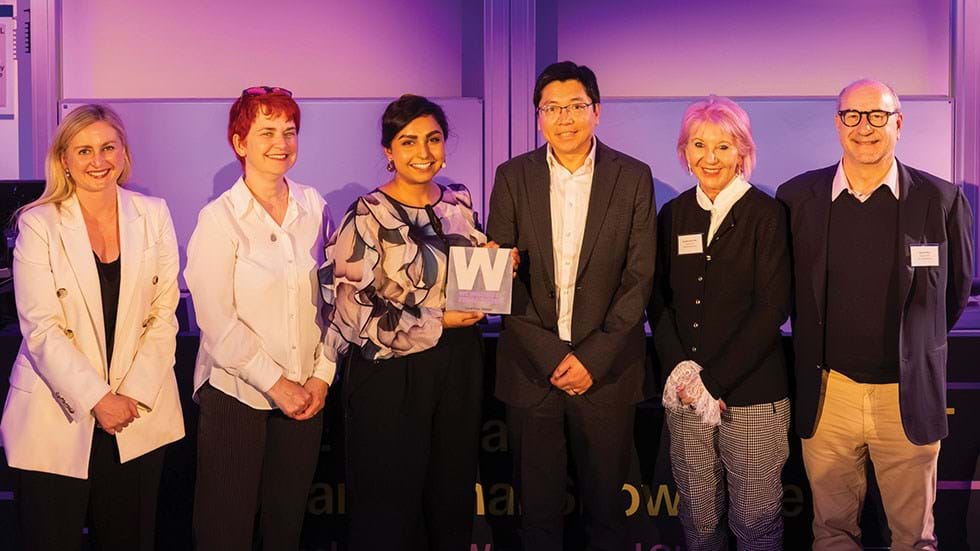
Spinning AlphaVectors Biotech out of Imperial and stepping into the CEO role. The technology started as my PhD and postdoctoral research; it now sits behind patent families, and it has a company around it whose whole purpose is to get it into the world.
What has been your biggest career challenge to date?
After eight years I knew lipid nanoparticles extremely well. Then suddenly I was in rooms discussing licence terms, equity, valuations and regulatory strategy, and I understood almost none of the language. Learning to say ‘I don’t know what that means – explain it to me’ without feeling like a fraud took longer than learning the material itself.
If you could give away one of your responsibilities to an unsuspecting colleague, what would it be?
Document management. Data rooms, version control, filing, expenses. I have spent evenings renaming files that no human will ever read.
Any interesting tales to tell?
There is a particular kind of vertigo in pitching your own science to a room of investors. In academia you are trained to hedge every claim, caveat every result and never oversell. In a pitch room, hedging reads as doubt. Holding both rigour and conviction at the same time is probably the most useful thing the past two years have taught me.
If I wasn’t a chemical engineer, I’d probably be...
Bridging the gap between exciting scientific innovations and the customers and stakeholders who could put them to use in the real world.
And how will chemical engineering change in the next five years?
RNA is about to stop being a Covid story. Personalised cancer vaccines, rare disease, self-amplifying constructs that let you dose far less material: the pipeline is enormous and it is moving quickly.
Do your friends understand what chemical engineering is?
Absolutely not, and I have made peace with it. When I say I make vaccines survive without a fridge, people are much happier, although I suspect several of them still think I invented a fancy fridge.
What advice would you give to a young chemical engineer starting out?
Talk to the people who would actually use your work, and do it far earlier than feels reasonable. Not at the end, when the paper is written and the design is frozen, but at the start, when their answer can still change what you build.
Any myths about the sector you’d like to dispel?
I give talks in secondary schools and I still meet girls who have quietly decided engineering is not for them by the age of 15. I would like that myth to be the first one we eradicate
Recent Editions
Catch up on the latest news, views and jobs from The Chemical Engineer. Below are the four latest issues. View a wider selection of the archive from within the Magazine section of this site.