Ithaca submits plans for Tornado gas field west of Shetland
ITHACA ENERGY has submitted plans to develop the Tornado gas field west of Shetland, targeting first production in 2029 – just as the UK aims to deliver a clean power system by 2030.
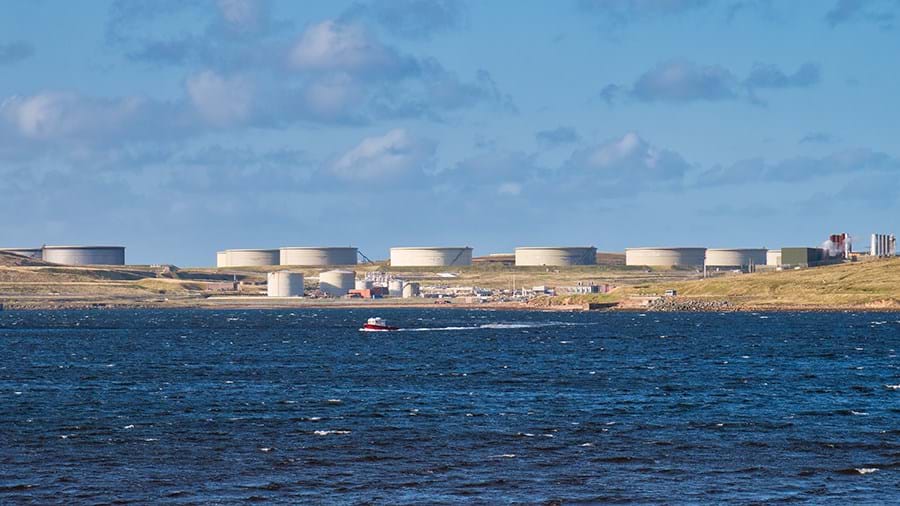
The company plans to drill up to three production wells tied back to existing infrastructure in TotalEnergies’ Greater Laggan Area (GLA), according to an environmental statement submitted to the UK Offshore Petroleum Regulator for Environment and Decommissioning (OPRED).
The development would initially involve two wells, with a third contingent on reservoir performance and access to spare capacity in the GLA network. Production would be transported to the Tormore installation via around 86 km of new pipeline and a control umbilical. Drilling is expected to be completed by Q3 2028 and first gas is expected by the end of 2029.
Discovered by OMV in 2009, Tornado is a relatively small field lying around 150 km west of the Shetland Islands, containing what Ithaca describes as “relatively lean gas condensate”.
The field sits close to the UK’s two largest undeveloped hydrocarbon discoveries: Equinor’s proposed Rosebank development, around 63 km away, and the Cambo field, 32 km away. Ithaca withdrew its plans for Cambo last month but is expected to resubmit them to OPRED.
Ithaca expects Tornado to produce gas for around six to ten years, saying the lifetime depends on reserves, production rate and life of the GLA infrastructure. The most likely production profile will see peak production of 5.1m m3/d (approximately 30,000 boe/d) in 2030, up to an estimated maximum of 9.5m m3/d that year, most of which will be transmitted through the UK gas network. By contrast, Rosebank will produce for 25 years peaking at a maximum of 73,000 boe/d, mostly oil.
Ithaca also said that after the wells are abandoned the depleted reservoir will not be suitable for CO2 storage since it is far from the nearest shore and there are very few local industrial emitters.
Emissions
Ithaca expects Tornado’s first full-year of production to be 2030 – the UK government’s “clean power” target year by which it aims for no more than 5% of the country’s power to be generated by burning unabated gas. Currently, gas provides around 35% of UK power generation.
Ithaca estimates that Tornado will meet 6.75% of the UK’s gas demand accounted for in the latest carbon budget. Based on North Sea Transition Authority (NSTA) projections, the field will provide up to 21% of UK gas production in its peak year.
Emissions from the development could reach 35.7m tCO2e over its lifetime, around 95% of which generated from downstream combustion of Tornado hydrocarbons. Under the most likely production profile Ithaca expects total emissions to be 25m tCO2e. Ithaca says the emissions are “minor and not significant” in the global context, highlighting the field will account for 0.015% of the global carbon budget under targets to limit warming to 1.5oC. The company also said it will meet around 0.12% of global gas demand accounted for by the UN Environment Programme’s 1.5oC projections.
Recent Editions
Catch up on the latest news, views and jobs from The Chemical Engineer. Below are the four latest issues. View a wider selection of the archive from within the Magazine section of this site.