Cracking the Scaleup Challenge with Engineered Fractals
Steve Peacock explains how fractal design principles are helping engineers achieve uniform flow, predictable mixing and more reliable routes to commercialisation
Quick read
- Scaleup without surprises: Fractal designs replicate identical flow paths, helping pilot performance translate reliably to full scale
- Fixing flow and mixing: Uniform distribution and controlled mixing reduce channelling and underperformance in large equipment
- Cutting cost and risk: More predictable scaleup can reduce reliance on expensive demonstration plants and speed up commercialisation
PROCESSES that perform well at pilot scale often fail when scaled up due to poor fluid distribution or mixing. These challenges can introduce significant technical and commercial risk. Engineered fractals offer one approach to addressing this problem, enabling more consistent performance across scales. They are now being applied in areas including direct lithium extraction (DLE) and metals recovery from recycled battery materials.
What are engineered fractals for fluid distribution and mixing?
In simple terms, fractals are recurring geometrical patterns that repeat themselves at ever-smaller scales. Fractal-like structures are very common in nature – for example in leaf veins, blood vessels or river networks. In engineering, fractals can be created by iteratively following a set of “generative rules”. One example might be to split a single line segment into two-line segments at a T-shaped junction and repeat this process at smaller scales. Following similar generative rules creates the diagrams shown in Figure 1 and Figure 2.
In fluid distribution, this approach allows a single inlet stream to be divided into many outlets that are hydraulically equivalent. Each flow path has the same length and number of turns, supporting consistent distribution across a surface or volume.
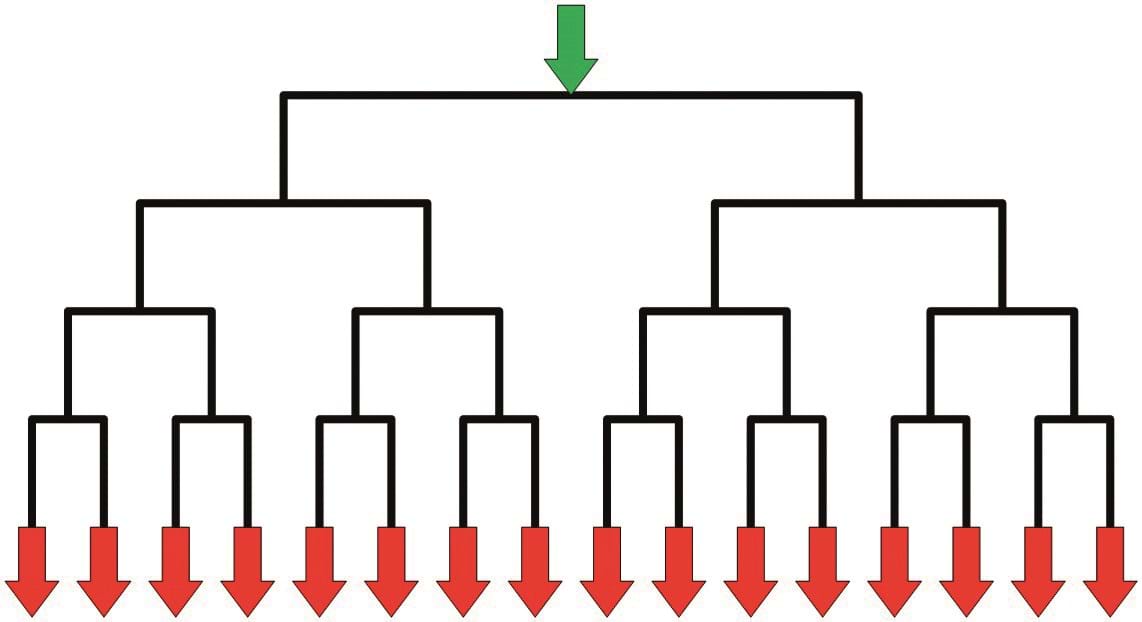
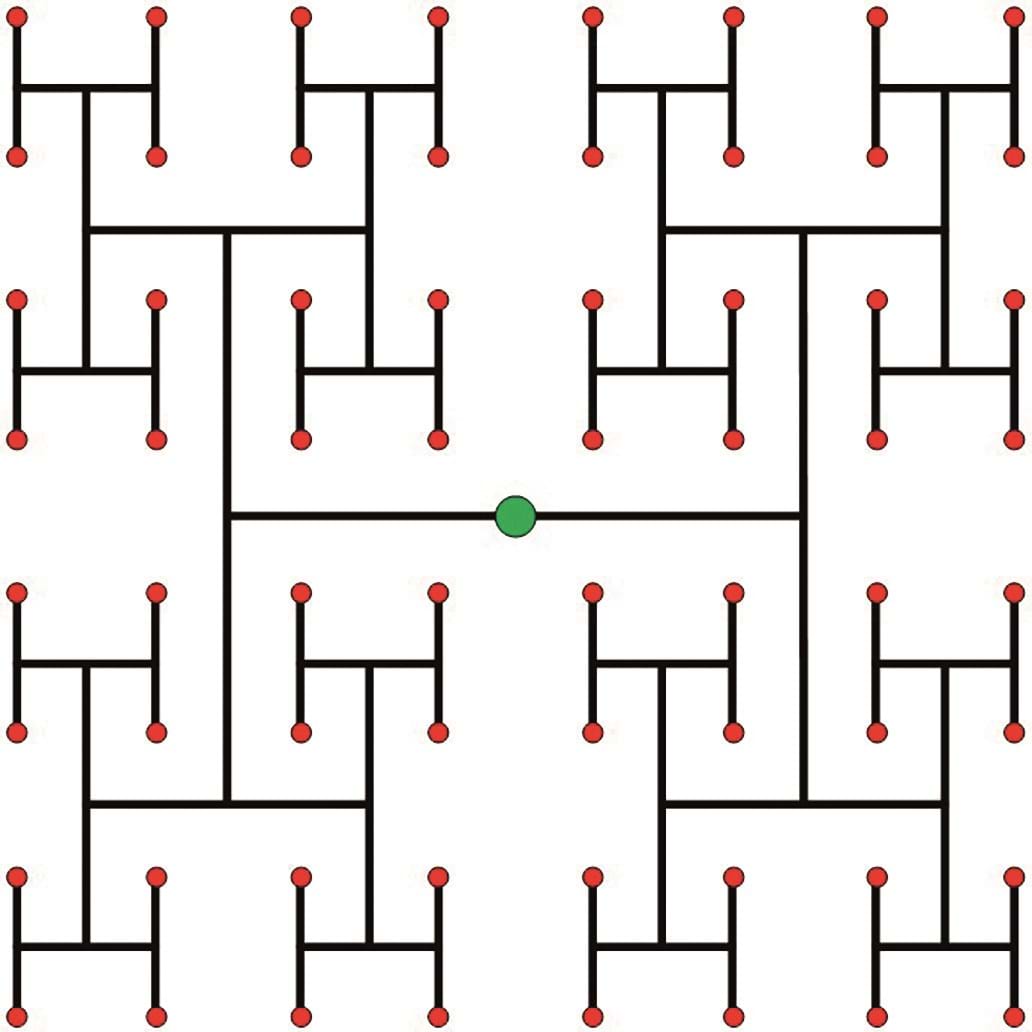
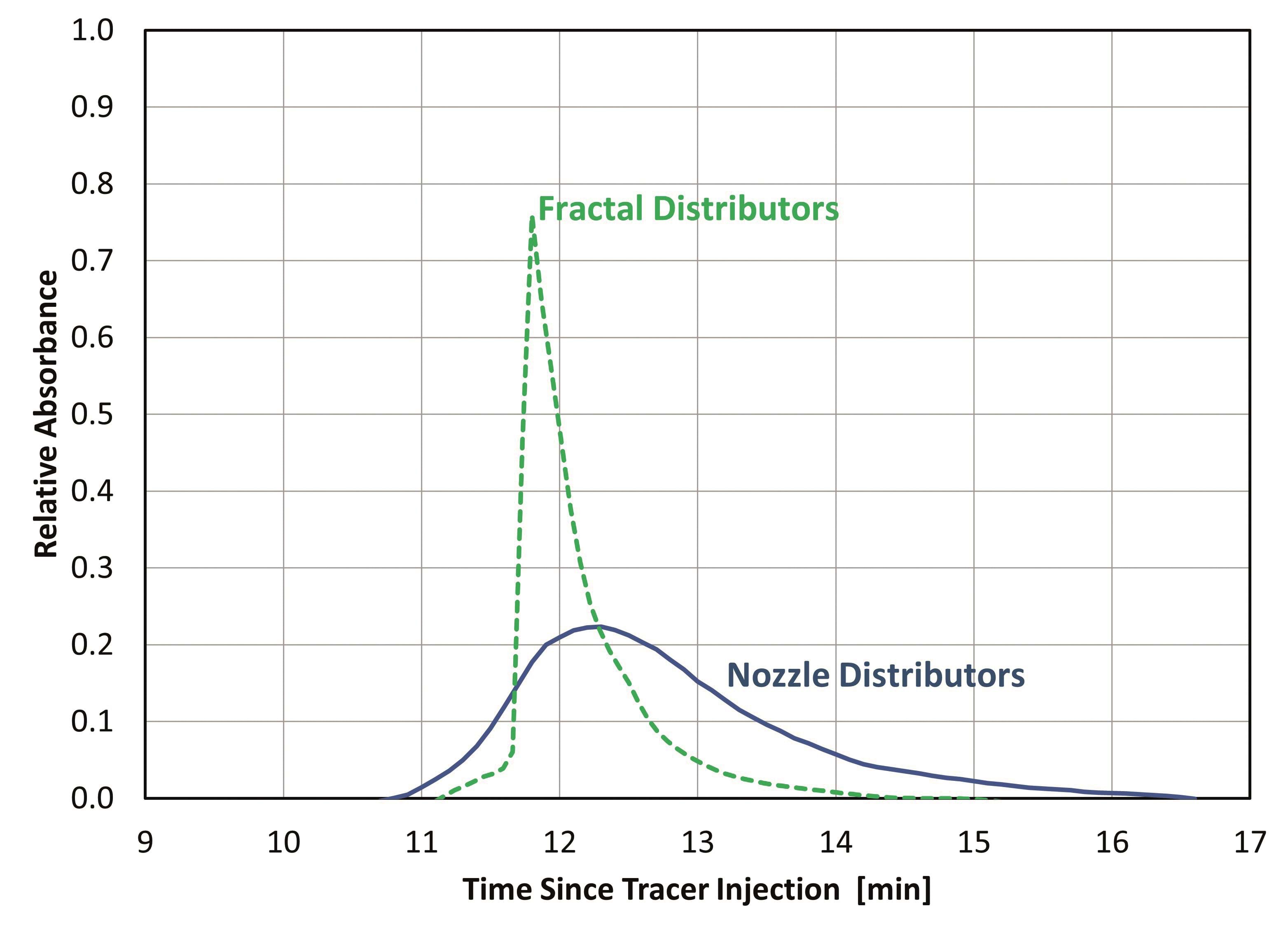
Engineered fractals have been employed for fluid distribution in industrial equipment since the early 1990s. One early example involved replacing nozzle distributors in a simulated moving bed chromatography system in a US beet sugar factory, where performance had deteriorated on scaleup. Tracer testing using a food-grade dye showed that the original distributors led to significant maldistribution. A clear improvement in the plug flow nature of the fluid was seen after the installation of the fractal distributors. Following subsequent replacement of the distributors in all eight of the resin columns within the chromatography system, the separator performance matched the levels seen at pilot scale.
High-quality plug flow is particularly important in packed-bed unit operations such as chromatography, ion exchange and adsorption but fractal distributors can also be applied to absorption, distillation, extraction, mixing and reaction processes. Typically, fractal distributors within large industrial process vessels are implemented in the form of “tiles” which cover the entire top and bottom of the vessel.
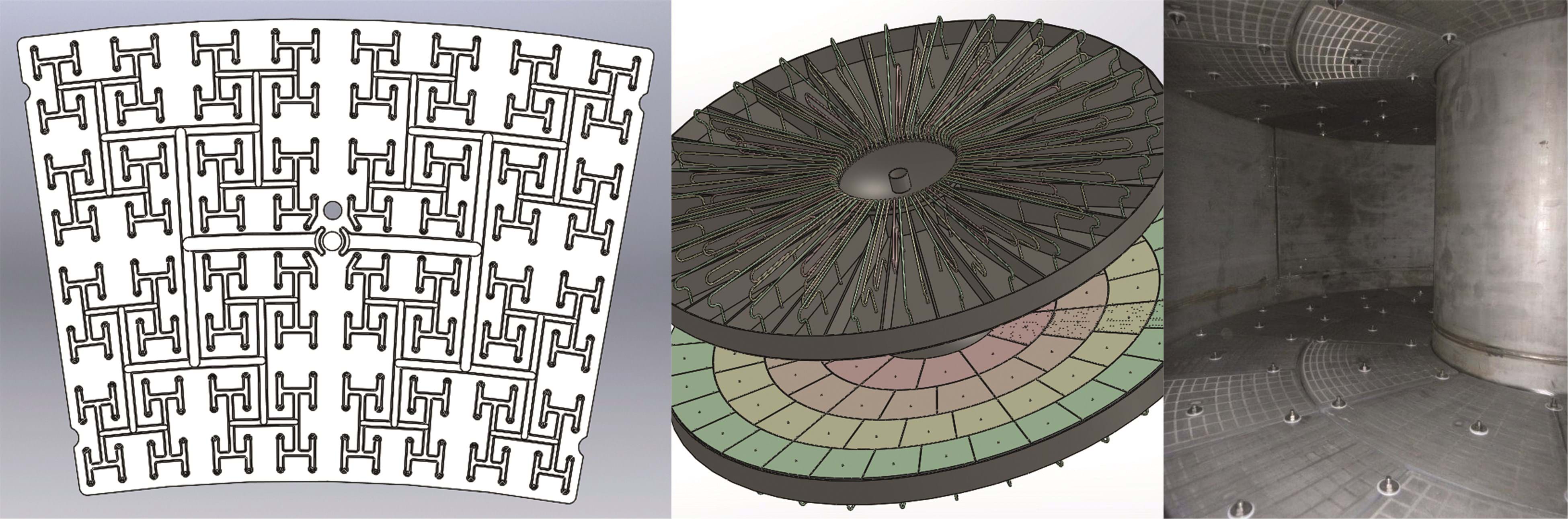
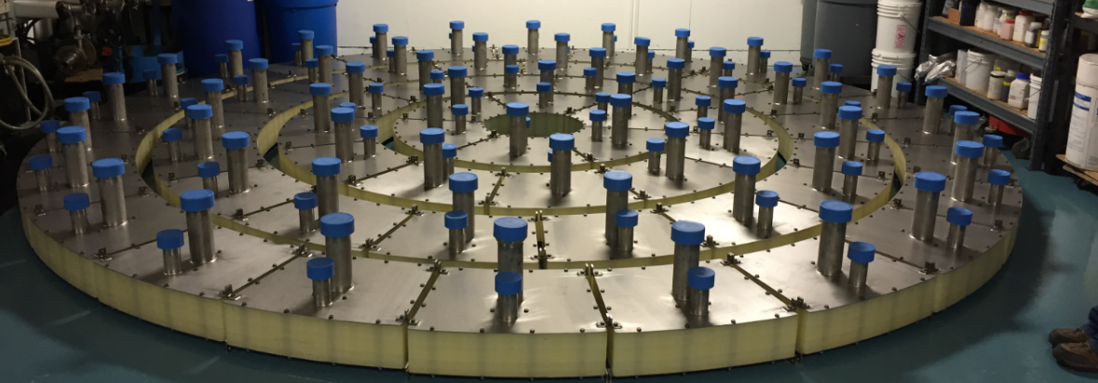
In applications requiring very high-quality plug flow fluid distribution, fractals are typically installed within vessels having flat tops and bottoms. In less-demanding applications, fractals can be fitted into traditional dished-end vessels. Because fractal distributors are based on symmetry rather than on pressure drop, these systems can operate with relatively low energy input and can tolerate wide flow turndown ratios.
Fractal concepts can also be applied to mixing. By distributing two fluids separately through parallel fractal pathways and combining them at many small outlets, mixing can be controlled at a defined length scale. This can be advantageous in large vessels, where conventional turbulence-based approaches can be difficult and energy-intensive.
Reducing scaleup risk
Recent Editions
Catch up on the latest news, views and jobs from The Chemical Engineer. Below are the four latest issues. View a wider selection of the archive from within the Magazine section of this site.