Age-old arguments

As plants and their workforces age across the UK, we look at why we could be at a critical point for preventing the next major accident
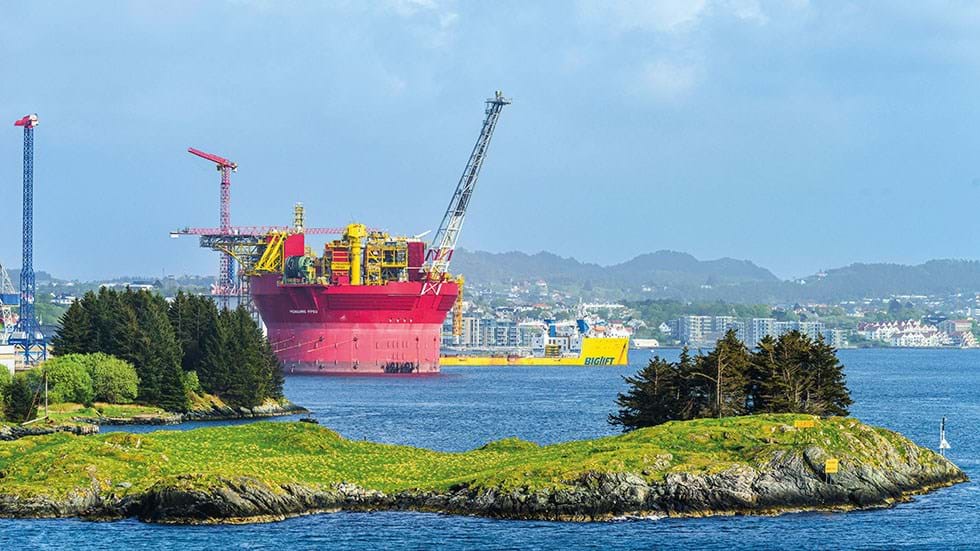
When Shell launched its first offshore platform in the UK in 30 years in February, it was supposed to represent a grand finale for the North Sea.
The Penguins installation, a state-of-the-art floating production, storage and offloading vessel, would show the world that the UK continental shelf could yield cleaner production from the basin’s dwindling supplies. Yet production lasted less than three months before 95 kg of hydrocarbon gas was released, prompting an emergency shutdown.
Shell intended to produce up to 45,000 boe/d at Penguins, while emissions would be 30% lower compared with the Brent Charlie platform it replaced. But more than ten years after initial design work began, Penguins was launched with a fundamental design flaw, according to the GB Health and Safety Executive (HSE).
Hydrocarbon liquids were routed to an open drains system, the HSE found – a design choice that experts say is highly inappropriate.
Flashing red lights
No injuries were reported as a result of the gas release, which, had it come into contact with an ignition source, could have caused an explosion. But Gus Carroll, chair of the COMAH (Control of Major Accident Hazards) Strategic Forum, says it is “astonishing” that such a fundamental design flaw made its way through multiple levels of design and hazard study.
Shell and the HSE have said very little publicly over Penguins. As The Chemical Engineer (TCE) website revealed last month, Shell had
been warned of the increased risk of a hydrocarbon release as a result of the open drains system in a hazard and operability (HAZOP) study in 2018.
It did not say why the recommendation to change the design seemingly went unheeded, commissioning a design that many have said was clearly flawed, while the HSE rejected a freedom of information request to view specific sections of the safety case on the grounds that it may compromise national security.
While Penguins is far from an isolated event, unintentional hydrocarbon releases are declining in the North Sea. The 67 incidents reported to HSE in 2025 marked the lowest frequency for at least ten years. Nevertheless, Carroll believes the “red lights are flashing” in leading indicators of process safety in the UK.
“The conditions that keep major accidents under control are really facing … unprecedented strain,” says Carroll, with these including ageing assets and workforce, a growing skills gap and reduced operational and capital expenditure.
And while individual workers leave the industry, major corporations are departing UK onshore and offshore plants alike, taking their corporate memory with them. “You can’t magic 20 years of process safety experience,” Carroll warns.
A view from the platform
Ben (not his real name) works in regulation in the UK offshore industry. He would feel more confident about the state of offshore process safety if operators had more rigorous management plans for ageing assets.
During an asset’s “managed decline”, cutting corners is common. Scaffold tubing for structural support is a familiar sight on oil platforms, Ben says, “a sign of a failure to maintain the integrity of that structure”.
Ben visited offshore accommodation that had been installed as a temporary block more than 25 years ago – well past its useful life. Maintenance of older and temporary equipment takes more effort and requires a detailed plan, he says. In this block, holes in the fabric had led to failures in integrity performance standards. Problems with accommodation can get out of hand as people and beds are needed to fix the situation, Ben says.
As maintenance jobs pile up towards the end of an asset’s life, it is common for many technicians to have already left in search of their next job. Staff shortages often drive managers to “convince themselves that it’s okay to live with that lack of maintenance” for the short amount of operating time the plant has left. But company executives regularly approve eleventh-hour life extensions, loading even more years onto already defective equipment.
Paying the piper
Nowhere is this memory fading more acutely than on the Piper Bravo platform in the North Sea. Installed in 1992 as a replacement for Piper Alpha, whose 1988 explosion killed 167 workers, emergency shutdown valve failures have earned Bravo three safety warnings in less than a year.
Valve failure contributed to the 1988 disaster when hydrocarbons backflowed onto the platform, fuelling the blaze.
Problems at Bravo became hard to ignore in January 2026 when an oil spill prompted an emergency shutdown. Operator NEO Next restarted production the following day, but without checking all the valves were working, TCE understands. Within eight days, NEO ceased production again after learning a valve was not fully closing on demand.
A yet more serious incident happened on 22 February when 500 L of hydraulic oil was spilled.
The HSE characterised the spill as a “major” incident, the first in over a year, meaning it had the “potential to cause catastrophic consequences if ignited”.
Six months earlier, the HSE warned NEO that some valves were ineffective and instructed them to set a valve speed performance standard, non-existent at the time. “This was the equivalent of being hit around the head with a wet fish by the regulator screaming in your face: ‘Something is going wrong here and you need to deal with it,’” Carroll says. “And they didn’t deal with it.”
Changing corporate structures
In Bravo’s early years, Piper Alpha’s shadow loomed large. Alan Raeburn worked for around ten years onshore for Piper Bravo from 2001, with occasional visits to the platform itself. Speaking from his home in Perth, Western Australia, he recalls having “a superb run”, operating for eight to nine months in the mid-2000s without a trip. Raeburn had visited Alpha’s sister platform Claymore, and remembers the stark difference of Bravo’s design. “There [were] just lots and lots more valves.”
It is unclear what happened during the eight-day period after the initial shutdown at Bravo. Raeburn says it’s “not credible” that the platform was operating with a faulty valve the entire time. Control rooms normally have a breakdown of valve failures, and checking they were all working properly “should have been part of the pre-restart checks”. However, NEO Next declined to tell TCE the exact date on which operators discovered the valve failure after the initial shutdown and has repeatedly declined to comment at all about the incident.
Process incidents
Incidents and safety warnings affecting the biggest operators in the UK process industries
Apache Corrosion in a dead leg line connecting the 50-year-old Beryl Alpha offshore oil platform to the multi-field North Sea SAGE pipeline system. Operators have known about the degradation for over two years
China National Offshore Oil Corporation (CNOOC) (ongoing) CNOOC failed to risk assess the integrity of hydrocarbon-containing pressure vessels on installations in the Buzzard, Golden Eagle, Scott, Ettrick and Blackbird offshore fields. Some have gone 17 years without inspection
BP April 2026 An oil export hose severed and dropped to the seabed at the nine-year-old Glen Lyon offshore platform after operators lost control of an oil offloading hose reel
ConocoPhillips April 2026 Unsafe welding on pipework containing dangerous substances at the 55-year-old Teesside oil terminal
Adura July 2025 Liquid nitrogen release at the 25-year-old Shearwater offshore platform caused decking to collapse
Perenco June 2025 24 kg hydrocarbon gas released during destruct work of redundant pipework at the Lancelot wellbore tophole
Ithaca March 2025 Unplanned explosion during well operations in the newly developed Seagull field. Inspectors said contractors had a “lack of experience”
Serica Late 2024 196 kg hydrocarbon release over 150 minutes after a compressor was incorrectly reinstated at the 30-year-old Bruce offshore hub
Eni August 2024 480 kg gas release and “open communication” between reservoir and environment for 18 days at the decommissioned Little Dotty subsea well. Operators had used inappropriate drill rig equipment during decommissioning work
ExxonMobil November 2022 2.4 t liquid petroleum gas release over 33 hours after a steel cooling structure collapsed at the 71-year-old Fawley refinery. Operators had been aware of corrosion in the structure for over ten years. ExxonMobil was fined £1m ($1.35m) earlier this year over the incident
Carroll believes fast-changing corporate structures in the North Sea are cause for some concern. The formation of NEO Next, for instance, brought together “companies with very different operating cultures”. While they are undoubtedly run by “first-class people”, newer companies such as NEO Energy, owned by a private equity investor, are run “in a very entrepreneurial type of way”. “You bring that together with TotalEnergies – incredibly Gallic, bureaucratic, hierarchical – [and] those are pretty difficult organisations to bring together.”
Buying individual assets also comes with subtle process safety challenges. During acquisition, a new owner typically inherits the previous owner’s systems such as permitting and incident reporting procedures. At Piper Bravo, NEO “would have worked out how to get the best out of those [systems] in order to maintain safety within their safe operating envelope and production targets,” Carroll says. “And that is just a different way of working to a more mature supermajor.”
Refinery out of its Shell
The challenges of changing ownership are not unique to the UK. Less than three years after Pemex acquired the near-century-old Deer Park refinery in Texas in 2022, two contractors were killed after mechanics opened a section of pipework pressurised with toxic hydrogen sulphide gas that had been incorrectly labelled.
The US Chemical Safety Board found that the Mexican state-owned oil company had inherited former owner Shell’s “human factors engineering” document as part of the sale, to which it explicitly referred in its equipment labelling policy. However, Pemex had “deviated from several of [its] own policies and procedures that could have prevented the incident” the CSB noted.
Back at Piper, NEO Next appears to have now set appropriate valve performance standards, and the company has now made all of the improvements to pipework that HSE inspectors recommended following the January shutdowns. But problems remain: at the time of writing, a notice from last June warning that valves were closing too slowly is still “ongoing”.
In any case, though, what isn’t ongoing is production. The platform is understood to have been idle since failing a leak-off test in February.
Uncertainty remains at Penguins too. Responsibility for the platform transferred from Shell to Adura in December 2025, since when the required design improvements have been made. But the operational results remain hidden to most: Adura did not say whether production has restarted since the gas release over a year ago.
The demongraphic dimension
“If you want a great career, consider becoming an expert in process safety, because you’ll never be out of work.” Such is the message Neil Smith, former head of workforce development at the charity Cogent Skills, delivers to young chemical engineers at conferences.
Smith has helped businesses manage employee competence for the last 15 years, but has witnessed the pool of specialists available shrink across the sector. Staff within the firms running the courses have “become fewer and fewer and harder to find”. Smith himself is evidence of this: despite having retired from Cogent three years ago, he remains the agency’s number one expert in process safety competence management.
As major UK industries have fragmented over recent decades, career paths for graduates are less clear than they once were, Smith argues. One manager he spoke to retained just one of their six process safety graduates after three years. “All of the others had either gone onto another organisation very quickly or gone into consultancy.”
Smith believes leadership must improve. He often felt “shock and dismay” at the speed at which managers would aim to have completely assessed staff competency. The culture can shift if responsible organisations are determined, he urges.
“You almost need the equivalent [of] a really strong apprenticeship pathway that focuses on safety as a career choice,” he says. He suggests an industry-funded “school of process safety”, or that leading universities go “hell for leather” in making process safety study a “premium product”.
But compounding the challenge of attracting new talent is the departure of older workers. In 2025, the average UK offshore worker was 44 years old. And between 2022 and 2024, the number of workers older than 65 increased by 25%. Carroll believes managers need to prepare for their exit much further in advance to transfer their “tacit” and “unspoken knowledge”. “It’s almost impossible to write that down and give to somebody else,” Smith concludes.
Recent Editions
Catch up on the latest news, views and jobs from The Chemical Engineer. Below are the four latest issues. View a wider selection of the archive from within the Magazine section of this site.