IChemE Matters - April 1018

Breaking down silos with open minds
Rafaella Ocone, IChemE President
DURING my presidency I have often spoken about diversity, though rarely focused specifically on gender diversity. For me, diversity is broader, embracing different ideas, backgrounds and experiences. Yet writing this on International Women’s Day, reminds me of my upbringing in Italy, where on this day mimosa flowers are trIaditionally given to celebrate women’s social and economic achievements. Mimosa grows in harsh environments, symbolising resilience, and its wide availability makes it an accessible symbol of recognition. And this brings me to reflect on how diversity and open minds help us break down silos.
As colleagues in particle technology know, designing a silo relies on Mohr’s circle. I first encountered it as a third-year undergraduate at the Università di Napoli, where even chemical engineering students studied structural mechanics if they wanted to become Chartered Engineers. Courses such as Scienza delle Costruzioni felt far removed from chemical engineering and I remember questioning their relevance. In hindsight, however, they offered an important multidisciplinary perspective. Ironically, while education encouraged breadth, academic research was often organised into rigid silos. I only began crossing those boundaries after completing my PhD in the US and later moving to the UK. That experience reinforced an important lesson: diversity in perspectives and experiences helps engineering move beyond boundaries.
Today, global challenges are transforming engineering into something more interconnected. Technical expertise remains essential but it increasingly needs to work alongside social awareness, ethics, responsible innovation and insights from other fields. This is therefore a call to educators to continue embedding ethics, professional responsibility and environmental, social and economic sustainability within engineering education. It is also a message to students: sometimes the subjects that seem least relevant while studying later prove to broaden our thinking the most. What may feel like a distraction at the time can become an essential part of a multidisciplinary perspective. And this brings me to remind every member our recently updated Code of Conduct and Ethics (bit.ly/icheme-code-conduct-ethics), where the first time the word “ethics” appears in the title. It is our code and we should all feel ownership of it.
Finally, I encourage volunteers to support the DiscoverChemEng (bit.ly/discover-chemeng) campaign, which brings chemical engineering into schools across the UK. By reaching students in regions such as Merseyside, Yorkshire, the North East and Scotland, the initiative helps widen participation and showcase the diversity of careers within our discipline.
If you would like to discuss any of the points raised or have ideas you would like to share, you can contact me at president@icheme.org

Energy security and geopolitical uncertainty
Mitchel Clark, Head of Policy
IT’s been an interesting couple of months geopolitically, with a number of events highlighting the benefits of nations increasing their energy security.
In the UK, the main political moment in March was the 2026 Spring Statement (see page 21), which set out the government’s view of the health of the economy. Compared with previous announcements it was relatively low-key, focusing on the importance of economic, political and social stability in supporting long-term growth.
However, the wider geopolitical backdrop remains uncertain. The escalation of conflict in Iran only days before the Statement underscored the continuing importance of energy security, as the impact on global oil and gas prices was already being felt. In the UK this has been reflected in a series of recent consultations covering gas security, carbon capture, utilisation and storage and the future of the downstream oil sector.
Concerns around energy security are also being echoed further afield. In New Zealand the government has announced plans for a new liquified natural gas (LNG) terminal, while Australia is consulting on the value of strengthening domestic supply chains for wind generation and transmission infrastructure.
Of course, it is important to consider these issues in the context of the ongoing transition to renewable energy. While the intermittency of renewable energy creates its own energy security issues, the domestic setting of renewable energy sources may offer at least a partial solution. Technologies such as long-duration energy storage (LDES) and nuclear small modular reactors (SMRs) may play an important role in addressing these challenges.
These debates highlight why technical expertise is so important in shaping effective energy policy. At the end of February, I had the chance to speak at an event for young chemical engineers at Queen Mary University as part of their Climate Action Week where the focus was precisely on how engineers, scientists and organisations like IChemE can contribute to government decision-making.
It was encouraging to see such a broad range of perspectives represented. Alongside discussions on battery technology and methane monitoring, speakers explored investment trends in climate initiatives and the importance of engaging younger generations in energy and climate policy.
A reminder that achieving secure, affordable and sustainable energy systems will require not only new technologies but also close collaboration between policymakers, industry and the engineering community.
For more on our work: www.icheme.org/policy
Recent Editions
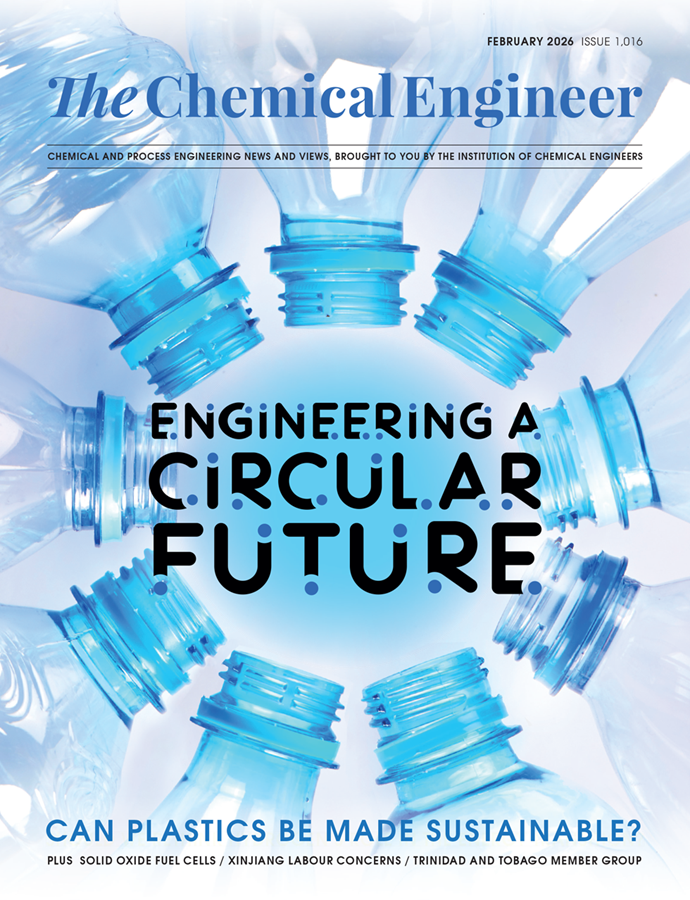
Catch up on the latest news, views and jobs from The Chemical Engineer. Below are the four latest issues. View a wider selection of the archive from within the Magazine section of this site.