ExxonMobil to slash low-carbon spending by US$10bn

EXXONMOBIL will cut its low-carbon spending by US$10bn as it shifts investment back towards upstream oil and gas, joining a growing trend of energy majors pulling back from renewables.
In an update to its 2030 business plan, the US’s largest oil producer said it expects a surplus cash flow of US$145bn over the next five years, boosting annual dividends to shareholders.
Exxon joins the likes of Equinor and bp in scaling down renewables and low-carbon investment and raising capital expenditure in fossil-fuel production.
The company plans to increase its upstream production to 5.5m boe/d by 2030, driven largely by LNG, the Permian Basin and its fast-growing assets offshore Guyana.
Low-carbon projects scaled back
ExxonMobil maintains it is “far ahead of its competitors” with its low-carbon goals, saying that it has contracts that will save around 9m t/y of CO2.
The company has also begun its first large-scale carbon capture and storage (CCS) project on the US Gulf Coast, which it claims could eventually capture up to 100m t/y of CO2.
Several additional CCS projects – developed with partners including Linde, Nucor, and New Generation Gas Gathering (NG3) – are expected to start up next year.
Weak customer demand
Like many energy companies, ExxonMobil’s pivot back to its core upstream business is designed to shore up investor confidence and stabilise earnings.
ExxonMobil recently paused work on its multi-billion-dollar hydrogen plant in Texas due to weak customer demand.
In its business update, the company highlighted that it had increased its projected earnings growth to US$25bn and its cash-flow growth to US$35bn between 2024 and 2030 – up US$5bn in each case.
It also noted that it is the second largest dividend payer in the S&P 500 and has increased its annual dividend for 43 consecutive years.
Recent Editions
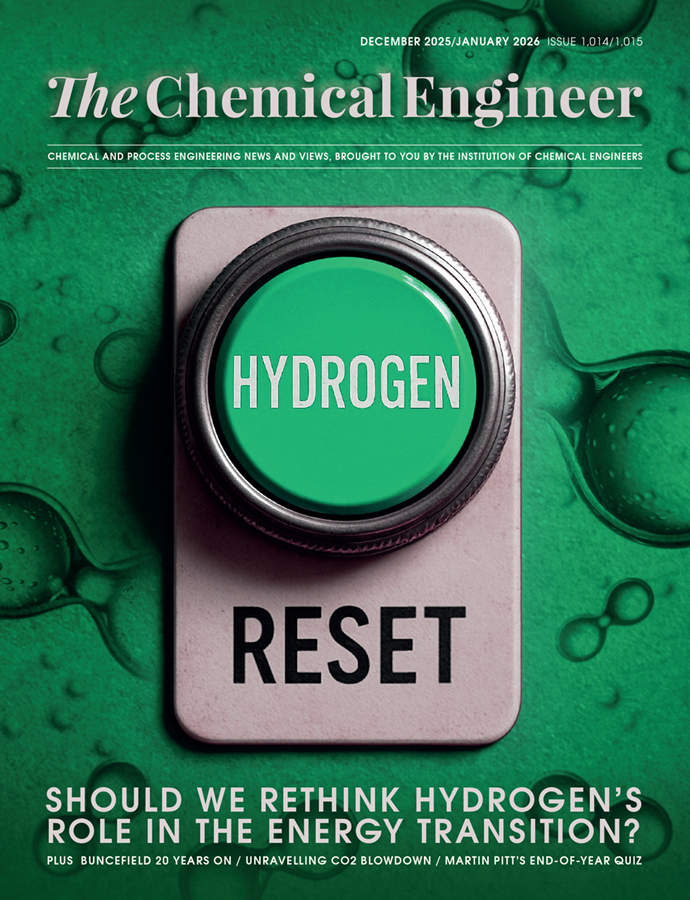
Catch up on the latest news, views and jobs from The Chemical Engineer. Below are the four latest issues. View a wider selection of the archive from within the Magazine section of this site.