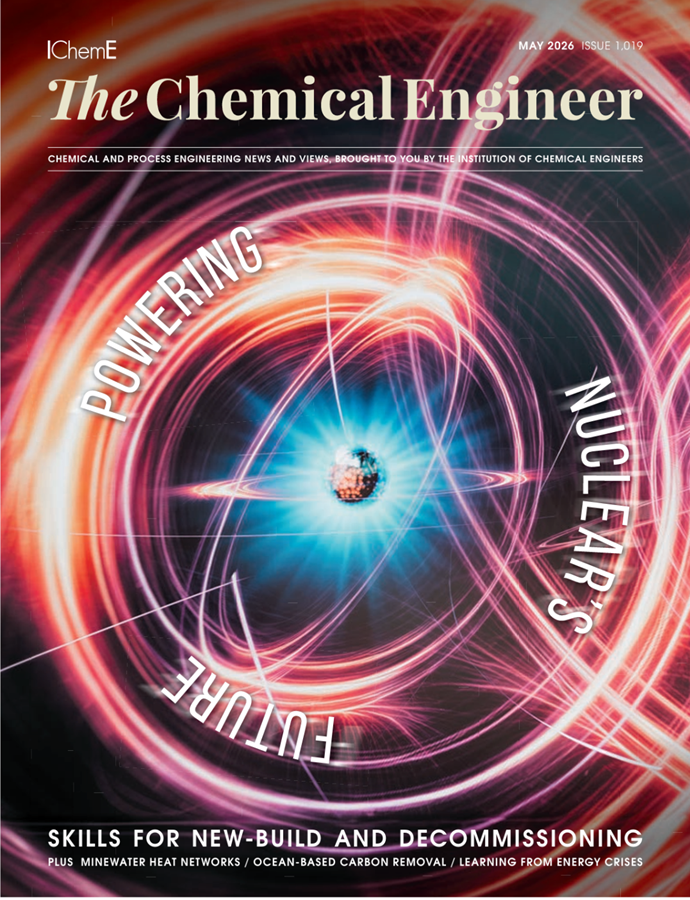
The People Powering Nuclear's Future
As nuclear continues to grow in the UK energy mix, Aniqah Majid speaks to industry experts and early-career professionals about the skills, pathways and people shaping its future
IT IS an exciting time for the UK nuclear industry. With large-scale nuclear projects, including Sizewell C and Hinkley Point C, set to begin operation in the next decade, the sector is poised to play a major role in transforming the UK energy landscape.
This anticipated growth is driving significant demand for talent. Sizewell C alone is expected to support around 17,000 jobs at peak construction, contributing to a wider need for an estimated 40,000 additional skilled workers across the sector by 2030. “
It is a great time to get into nuclear,” says Jacq Longrigg, group people development director for the Nuclear Decommissioning Authority (NDA) group. “We talk about the nuclear renaissance and the UK’s commitment to energy and defence security is enduring and makes our sector an exciting one to work in.”
Building the talent pipeline
To support this expansion, industry and government have developed initiatives to strengthen the talent pipeline, including the Nuclear Skills Plan, which aims to better align education, training and workforce demand.
A key part of this effort is early engagement through higher education. One example is the Skills and Training Underpinning a Renaissance in Nuclear (SATURN) programme, a centre for doctoral training backed by the UK Engineering Physical Sciences Research Council. The initiative brings together several UK universities to deliver cross-sector training.
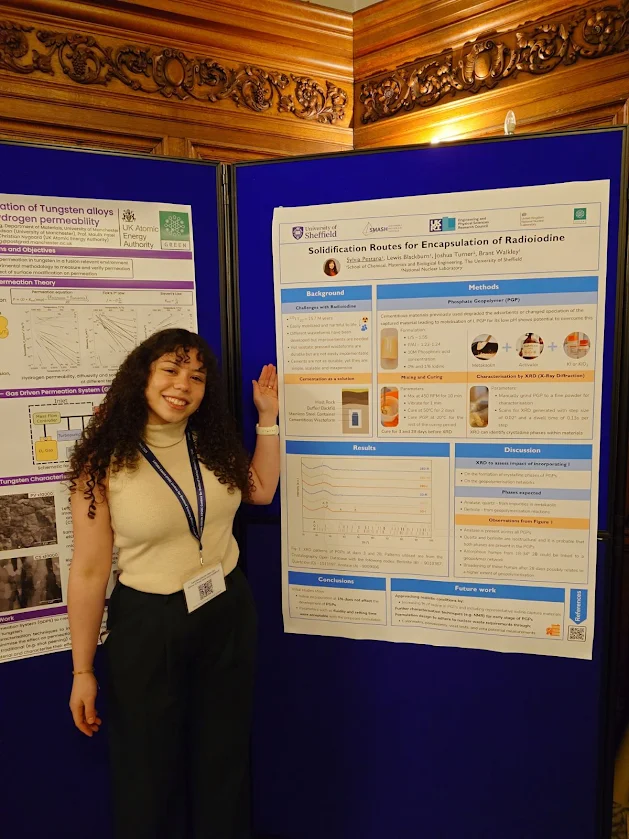
“A lot of the support I receive in my career is through SATURN,” says Sylvia Pestana, a PhD candidate at the University of Sheffield researching radioactive waste encapsulation. “There is a lot of opportunity in the cohort – not just to learn about the nuclear industry in the UK but other countries. I was able to go to the US to the Oak Ridge National Laboratory which was so cool because you get to see all the science produced by the world.”
Pestana hopes to pursue a career in nuclear consulting and highlights the value of broader engagement.
“What has really enriched my experience is engaging with the industry in different ways. I work with the university network and the Nuclear Institute where I am the event lead, while at the University of Sheffield, I am the events and logistics coordinator for the applied nuclear fusion and science society.
“Through this I am not only trying to engage with industry but provide a chance for undergraduates who are looking to get into the nuclear sector.”
Engagement remains a key priority, with Longrigg emphasising the importance of communication skills alongside technical expertise: “We talk about communicating one-to-one, one-to-few and one-to-many – skills that are quite different but equally as important.
“We want students to continue with STEM subjects in KS3 and KS4, but in securing a career with us, it’s not just about having the appropriate qualifications. We want people who are curious, we want people who want to try different approaches with us to bring different ideas and innovation to decommissioning.”
A diverse and evolving workforce
The nuclear workforce is broader than many might expect. NDA employs around 19,000 people across 18 sites and supports around 40,000 supply chain roles across 5,000 businesses.
“We have a diverse organisation with over 900 different roles and the decommissioning mission is varied,” says Longrigg. “We’ve got deep sea divers, drone pilots, train drivers, seafarers, communication specialists and PR people, doctors and nurses, as well as engineers and operators – there is an absolutely massive gamut of different careers.”
Career pathways and transition
Alongside attracting new entrants, the industry is encouraging career transitions from other sectors.
“Nationally we have promoted sector-switching, especially around those adjunct sectors such as oil and gas,” says Longrigg. “There you have absolute transferable skills, with different challenges but in a highly regulated environment where the risk and safety culture is prevalent.”
Support is also available for those returning to work after a career break, as well as former military personnel transitioning into civilian roles.
David Medina’s journey into nuclear reflects this flexibility. Now a PhD candidate at the University of Strathclyde working on hyperspectral imaging for decommissioning, his path into the sector was far from direct.
After developing an interest in nuclear physics during his A-levels, he pivoted to French (though even his oral exam centred around nuclear).
Following brief stints in teaching and accountancy, he returned to education, completing a part-time physics degree. Struggling to find a job which would allow him to be present for his son, it was his wife who encouraged him to pursue a PhD.
“The PhD has been so accommodating,” he says. “My wife is a teacher, so I can only go down to the lab during school holidays. Everyone at the lab needs to work around when I am free, and they do, which I wasn’t expecting.”
Meeting the challenge
“We want people who are curious, we want people who want to try different approaches”
From new-build projects to decommissioning, nearly 100,000 people currently work in the UK nuclear sector – and that number is set to grow.
Meeting this demand will require not only technical expertise but also adaptability, communication skills and a willingness to move across disciplines. Longrigg believes the industry is evolving to support this shift.
“One of our operating businesses has piloted a returners programme, which is focused on people returning to the workplace after time away,” she says. “Whether that’s from having a family or other decisions, we want to support them in rejoining the workforce.”
Recent Editions
Catch up on the latest news, views and jobs from The Chemical Engineer. Below are the four latest issues. View a wider selection of the archive from within the Magazine section of this site.