Designing the End of Nuclear
Nuclear plants run for generations and can take just as long to dismantle. Aniqah Majid reports on how this delicate process is done efficiently and safely
Quick read
- Decommissioning is a long-term challenge: Nuclear sites can take decades to dismantle, requiring sustained planning, monitoring and risk management over extended timescales
- Design legacy shapes today’s complexity: Many early nuclear facilities were not built with end-of-life in mind, creating technical challenges around waste handling, materials and site remediation
- Waste minimisation is central to the process: Chemical engineering principles such as the waste hierarchy guide efforts to reduce, recycle and safely manage radioactive materials during decommissioning
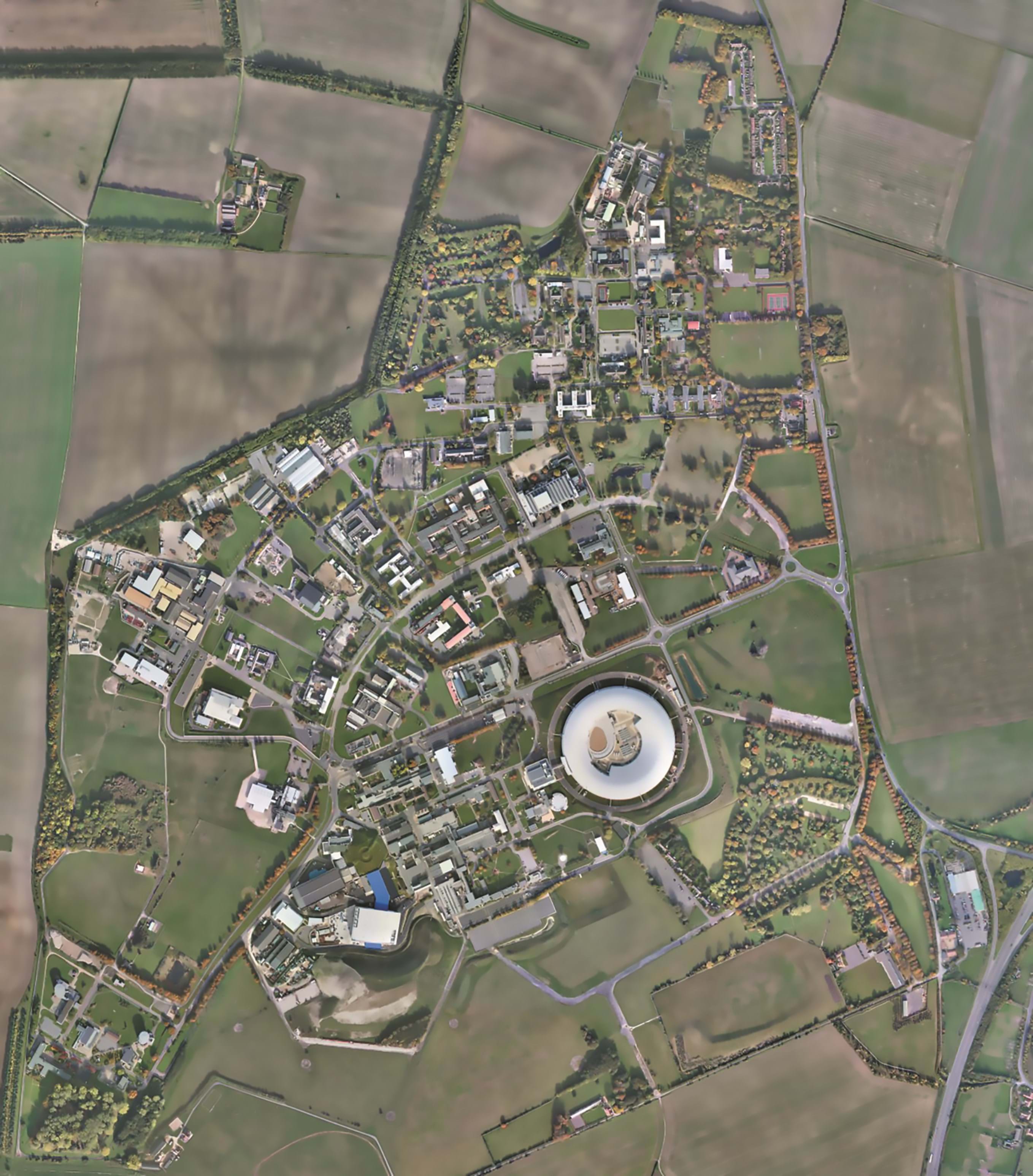
SPANNING 84 hectares of Oxfordshire countryside, the Harwell nuclear site has undergone a remarkable transformation. Established in 1946 on a former RAF base, it was the UK’s first Atomic Energy Research Establishment, hosting 14 reactors and around 150 facilities at its peak.
Since the early 1990s, the site has been undergoing decommissioning by Nuclear Restoration Services (NRS), a subsidiary of the Nuclear Decommissioning Authority (NDA). Around 100 facilities have already been cleared and returned to green space, with land released for development by the neighbouring Harwell Science and Innovation Campus.
“We are quite a long way into the decommissioning journey but because it is such a big site with a wide range of facilities, it’s a big undertaking and it’s going to take us a long time,” says Laura Street, site manager at Harwell, who has worked there for around 20 years.
Before decommissioning can begin, facilities must undergo extensive cleaning and waste removal. Factors such as waste type, storage conditions and transport risks must be carefully assessed before any work can proceed.
“In chemical engineering terms, you need to think about how you avoid creating waste from decommissioning,” says Neil Blundell, a principal nuclear safety inspector and chemical engineering specialist at the Office for Nuclear Regulation (ONR). “Can you minimise the waste you create or, better, recycle that material?
“With nuclear, using the waste management hierarchy and following the licence conditions, licensees are looking to minimise both the amount of waste and the space needed to store it recognising balances must be made with other factors.”
Legacy challenges
A key challenge at Harwell and other first-generation nuclear sites in the UK – known as Magnox sites – is that they were not designed with end-of-life considerations in mind.
“Our facilities were not designed for decommissioning and that is what drives some of our longer timescales,” says Street.
“The site was developed in an era where asbestos was incredibly popular and that can raise challenges when we characterise buildings. We have to consider which laboratories can safely receive samples containing both radioactive materials and asbestos.”
To manage these risks, operators and regulators carry out continuous monitoring and periodic safety reviews. The ONR reassesses each site’s safety case every ten years, requiring evidence that risks are being reduced so far as is reasonably practicable.
“That includes monitoring ageing structures and equipment and mapping out reasonably foreseeable events that may have low frequency of risk today but in the long-term could be realised,” says Blundell.
Operators must be able to demonstrate that a facility can store radioactive material safely over extended periods – or that they can be upgraded to do so.
Decommissioning in practice

Despite these challenges – including the possibility of unexploded ordnance from its RAF past – Harwell has made significant progress. In 2021, around 97,000 t of material was removed from a 4.2-hectare site that included the liquid effluent treatment plant, representing the largest land remediation project undertaken by NRS.
To date, around 23 hectares have been released for development. Three reactors remain; all have been defuelled and await final dismantling. Around 250 people currently work on site. Teams are responsible both for maintaining ageing facilities and for managing waste retrieval, characterisation and disposal.
“The facilities we have left on the site include waste processing facilities, a post-irradiation examination (PIE) facility, radiochemical lab and supporting infrastructure,” says Street.
Understanding historic waste presents a particular challenge. The team must go back through records to understand what experiments took place and what materials were used.
“We are always looking to use the waste hierarchy,” she says. “We try to recycle as much as we can and identify the most efficient waste route for each type.”
Before land can be released, it must undergo extensive surveying and sampling. Operators then compile a de-licensing case demonstrating that radioactive material has been removed to acceptable levels.
Regulating for the future
Decommissioning is tightly regulated, with oversight from both the ONR and the environment agencies.
“They work with us to ensure that our processes are optimised to allow us to carry out our decommissioning safely,” says Street.
Regulatory approaches are also evolving. The ONR has recently shifted its focus at former Magnox sites towards conventional health and safety risks, reflecting the reduced nuclear hazard once fuel and nuclear materials have been removed.
“It is always beneficial when regulators change their approach to be proportionate to our phase of life cycle,” says Street. “It shows that they are focused on what we are doing right now.”
More broadly, nuclear regulation must account for extremely long timescales. The Nuclear Decommissioning Authority’s strategy extends more than a century into the future.
“How do I tell my great-great grandchild what to do with the waste I have seen stored in this facility? says Blundell. “It is important to develop systems and knowledge so that someone not yet born can manage spent fuel stored in a facility a hundred years before. I’d like them to look back and say, ‘my great, great grandad did all he could to make my job easy’ and not say ‘no one thought of decommissioning!’”
A long-term transformation
While Harwell does not have a fixed end date for decommissioning, more green space is steadily being created.
“When you see pictures of the site now, most places that you see a plot of grass, that used to be a building,” says Street. “I have worked on the site for two decades and it has gone from being densely built to having these large green open spaces. The more grass the better.”
Recent Editions
Catch up on the latest news, views and jobs from The Chemical Engineer. Below are the four latest issues. View a wider selection of the archive from within the Magazine section of this site.