Preparing Malaysian engineers for a global career
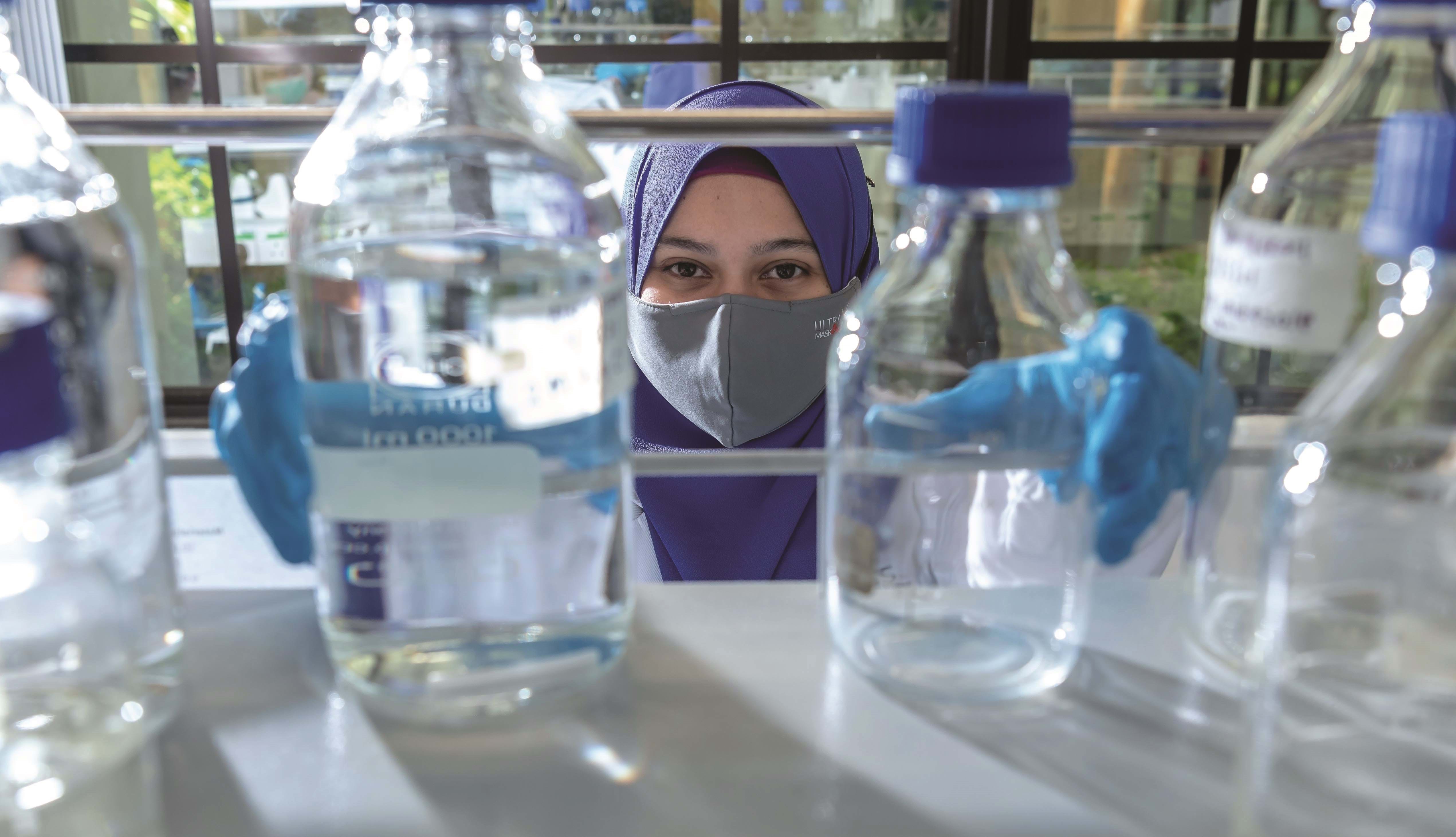
Malaysia has a robust group of chemical engineering courses. Aniqah Majid looks at what makes the region unique for graduates
TRAVEL is a major part of work as a chemical engineer, – experts may be flown in from around the world to lead plant operations in Turkmenistan or design geothermal energy systems in Kenya. The need for chemical engineering expertise extends across the world, so education must reflect that reach.
For chemical engineering, students have a range of universities to choose from, from domestic institutions including Universiti Malaya and Curtin University Malaysia, to international university programmes from the University of Nottingham and Heriot-Watt University.
IChemE’s presence in Malaysia has allowed the Institution to award accreditation to several chemical engineering courses, including the aforementioned universities – which some teachers say has been a real benefit.
Accreditation typically offers graduates, once they have gained the required experience, or ‘Initial Professional Development’, a streamlined route into professionally qualified membership and registration; it also provides students, parents and employers with a mark of assurance that the degree programme meets the standards set by the engineering profession. Some academics in Malaysia are also actively involved in IChemE’s committees and wider assessment activities, thereby playing an active role in IChemE’s global peer review process. Kai Seng Koh has been teaching at Heriot-Watt since 2016, having also taught and studied at the University of Nottingham Malaysia, and University Putra Malaysia. Throughout his own experience, and alongside his students, he upholds chemical engineering education in Malaysia, which he says is geared toward giving students a global career pathway.
Working with industry

As with many engineering courses in the world, in Malaysia students must complete some form of industrial placement as part of their degree – and the location could not be more ideal for Malaysian students.
“At Heriot-Watt we really believe that teaching and industry go hand-in-hand,” said Seng Koh.
“The minimum requirement for placements in Malaysia is eight weeks, but we typically go for three-month industry placements for the students. Most of my students are now in various companies across Malaysia, with one of my students actually securing a placement in Japan.”
For Seng Koh’s students, one of the most lucrative placement opportunities is in Malaysia’s expansive oil and gas industry, with two of his students in downstream processing.
I caught up with Rith Hasni, a former student of Seng Koh’s who, at the time of our interview, had just started his first week at ExxonMobil in Malaysia.
He said: “I had two internship opportunities during university, one with KLK Oleo and one with ExxonMobil. One of the key reasons for choosing Exxon was because I wanted to grasp how it would feel to work for a multinational company and compare US working culture with Malaysian. Companies like Exxon, or any US-based firms, are known for being fast-paced. So that’s one of the reasons I chose Exxon as my internship opportunity, and fortunately I was able to go on be a campus hire.
“As for the first week, I would say as a manufacturing process engineer for the company, Exxon really emphasises the understanding of chemical engineering fundamentals.”
Dominic Foo, head of department of chemical engineering at the University of Nottingham Malaysia and fellow of the IChemE, said: “In University of Nottingham Malaysia, we work with our industrial partners to strengthen our graduates’ technical skillsets.
“Many industrial partners become our Industrial Advisory Board members, as well as offering industrial projects as final-year projects.”
Exchanging expertise
Malaysian students need not stay in Malaysia during their academic careers. The likes of Heriot-Watt and Nottingham offer exchange programmes, where students can spend a period of their course in one of their other bases, which include the UK, China and Dubai.
Hasni explained that, although research areas may differ by region, the consistency of the teaching remains fixed, with accreditation maintaining that stability.
He said: “One of the unique aspects about Heriot-Watt is that all three campuses are standardised. So, no matter what course you’re taking, or whether there’s a difference in lectures, generally the course material will be the same. So, if you spent week four in Malaysia to week five in UK there should be the same delivery in content.”
The University of Nottingham Malaysia has a range of university partners in the UK, recently launching an exchange programme with the University of Surrey.
Seng Koh said: “The exchange model enables students to experience different cultures, and I think the younger generation appreciate this. In the past year we have hosted a few students who came from Scotland, and a number of our students went to Scotland in exchange. Some would go for a year, and I know a few will just permanently transfer until they graduate with the UK campus. So that is the flexibility that we want for our students to give them a global university experience.”
Career preparation
Malaysia is part of the Transitioning Industrial Cluster Initiative, an international scheme launched in 2021 at the United Nations Climate Change Conference (COP26) and which accounts for 40 industrial clusters across 21 countries. The initiative collaborates with businesses and governments to advance industries in different regions while also attracting investment into those clusters and moving toward reducing emissions.
Sustainability is a core part of the initiative, and part of Malaysia’s overall plan for its biggest industries, including energy and oleochemicals.
Foo said: “With the rising emphasis on sustainable development and the ever-evolving Industrial Revolution 4.0 [IR4], we are preparing our students to embrace both sustainable development and IR4 during their undergraduate studies.”
To emphasise the scale of sustainable industry demand, Heriot-Watt has gone so far as to redesign its whole programme.
Koh Seng said: “From 2020 to 2024 we underwent a revamp of our programme to be ready for the future of chemical engineering. We have introduced three sustainability-related courses because we wanted to be sure that students understood throughout their academic careers how to factor in sustainability and the environment to their projects.”
Malaysia has undergone a massive transformation over the past few decades, moving closer to the forefront of industry and new technologies, particularly in the sustainability of palm oil. Its education institutions have moved in lockstep with green-transition efforts, taking the lead on research for more sustainable practices in palm oil and oil and gas.
Foo said: “Malaysia is a country with plenty of resources, such as minerals (from tin mining a century ago to oil and gas today) and plantation commodities (palm oil, rubber). Chemical engineers have helped transform the country from an agriculture-focused one (up until the 1970s) towards an industrialised one, in which higher-value-added products are made.
Recent Editions
Catch up on the latest news, views and jobs from The Chemical Engineer. Below are the four latest issues. View a wider selection of the archive from within the Magazine section of this site.