Concrete proposal
While the concept of self-healing concrete has been around for a while, it’s now moving out of the conceptual stage with the prospect of becoming a truly multi-dimensional, adaptive and smart material. Alison Ebbage reports
Concrete is already embedded into societies the world over. It is inexpensive, strong and durable.
And it is the second most-consumed substance on Earth after water, underlining why even incremental improvements in performance or emissions could have a global impact.
Yet concrete is also bad for the environment. In 2022, cement – the key ingredient in concrete – made up around 8% of global CO2 emissions, according to the International Energy Agency and World Resources Institute. That year saw the world produce 4.4 billion tonnes of cement, releasing 2.7 billion tonnes of CO2.
What, then, if concrete could reduce its environmental impact not only through self-healing but also by making a positive environmental impact in its own right? Evolving concrete in this way could mean durability and decarbonisation can converge to make it a “super material”.
Thus far, durability has dominated the narrative. The value proposition has been clear: fewer repairs, lower maintenance budgets, extended asset life. All aspirations that have captured the imagination of engineers and policymakers alike.
Dutch company Basilisk has commercialised the self-healing concrete technology, while the Hong Kong University of Science and Technology and the University of Hong Kong are developing biomineralisation-based self-healing concretes designed specifically for marine durability (see Embedded bacteria and colour conditioning and Marine self-healing and carbon capture).
The economics are significant. Industry estimates suggest self-healing concrete systems currently carry an upfront cost premium of 5–30%, but proponents argue that lower maintenance requirements and extended asset life can offset those costs over time, according to MPS Concrete Solutions.
Biological adaptation
Other research initiatives are being reimagined too, with the aim of making concrete a multi-functional platform that can sense stress, store energy, regulate moisture, capture carbon and even adapt itself biologically to its environment.
“Around the early 2000s, research and development on self-healing concrete focused mainly on increasing concrete structure resilience, longevity and sustainability,” says Kua Harn Wei, associate professor in the Department of the Built Environment, College of Design and Engineering, at the National University of Singapore.
“More recently, self-healing concrete has begun to play more varied and concurrent functions, including capturing carbon.”
He cites his own research project that looked at using biochar to immobilise carbonate-producing bacteria to seal tiny cracks.
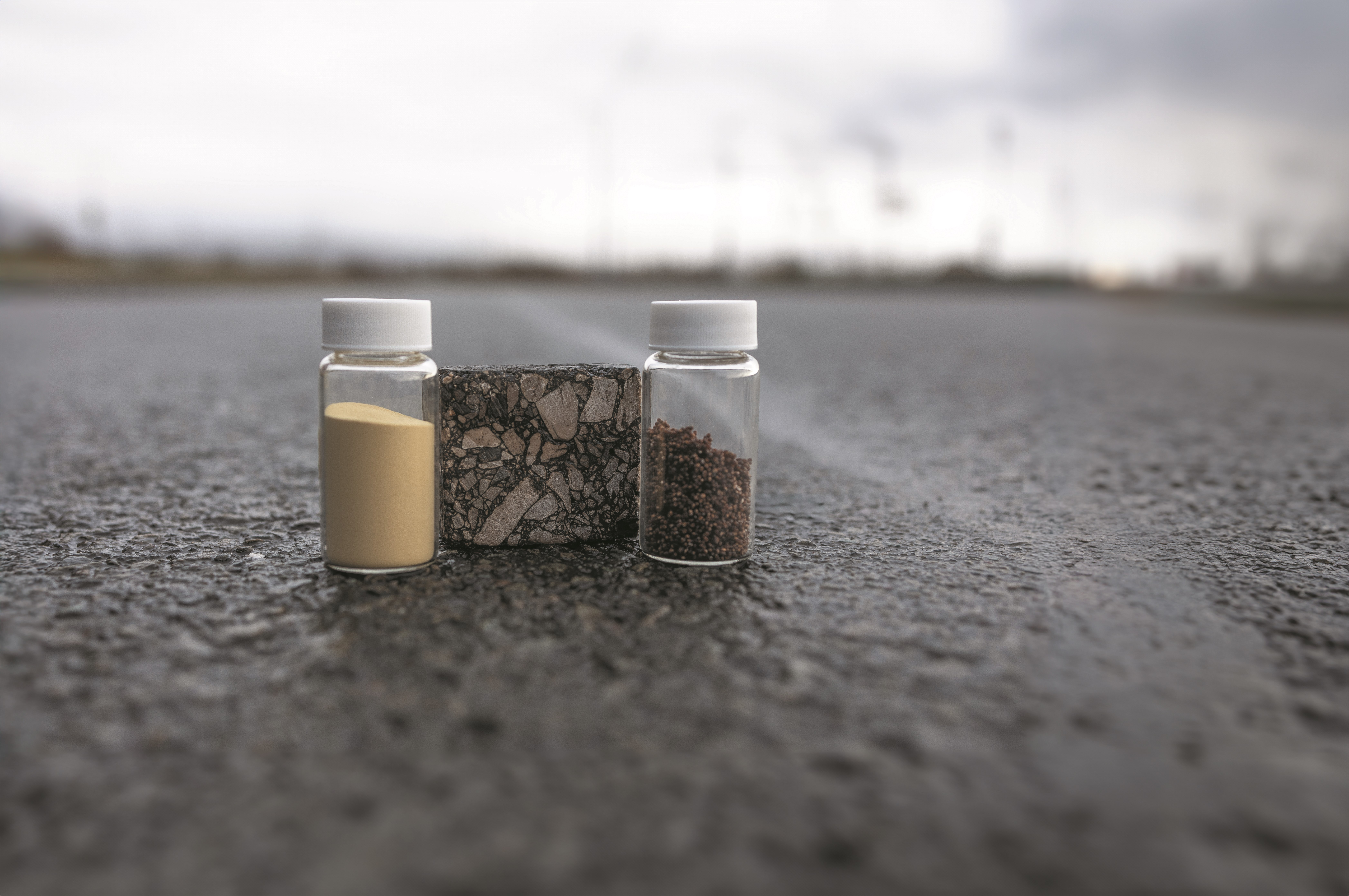
Another project at Swansea University in Wales examined biomass-derived self-healing asphalt binders, reducing reliance on petroleum inputs while improving crack resistance. This innovation uses circular material streams where waste becomes functional infrastructure.
Jose Norambuena-Contreras, the university’s senior lecturer in the Department of Civil Engineering, explains: “We have been looking at sustainable solutions that would lengthen the lifespan of asphalt and came up with some tiny capsules that would be activated by certain conditions, such as traffic or weather. It is an assistive technology and we have seen a successful implementation in China. The next step is to get something going in the UK too.”
Embedded bacteria and colour conditioning
Dutch company Basilisk has commercialised the self-healing concrete technology originally developed by Henk Jonkers and Erik Schlangen, professors at Delft University of Technology (TU Delft).
The system uses bacteria embedded in the concrete to produce limestone when cracks form, allowing small cracks to be automatically repaired. The technology is already being applied in infrastructure such as tunnels, basements and water-retaining structures.
Researchers at TU Delft are also now exploring coatings and composite materials that can reveal damage through colour changes, allowing engineers to quickly see where a structure is under stress or beginning to deteriorate.
Dr Mohammad Fotouhi, associate professor in the Faculty of Civil Engineering and Geosciences at TU Delft, says: “More broadly, adaptive materials are also emerging in composites, coatings and structural materials that can respond to damage or environmental changes. The goal is to create materials that not only carry loads but also provide clear information about their condition, helping engineers maintain infrastructure more effectively. The key step towards real deployment is integrating these functionalities into scalable manufacturing processes and demonstrating long-term reliability in real structures.”
Sustainability
All of this represents a subtle but crucial shift in design philosophy. Smart materials are not just about maintenance costs; they can also be positioned as contributors to carbon neutrality strategies. And long-term project sustainability is now moving up the agenda. In large systems such as bridges, wind turbines and buildings, even small improvements in durability can significantly lower the environmental impact.
One of the ways in which sustainability can become a part of the debate is the development of the ability to monitor the material. It makes for more targeted maintenance, lower material consumption and less environmental impact over the life cycle of infrastructure systems.
Mohammad Fotouhi, associate professor in the Faculty of Civil Engineering and Geosciences at Delft University of Technology, says: “The main environmental benefit is extending the service life of structures and reducing the need for repairs or replacement. If materials can repair cracks themselves or provide early warning of damage, infrastructure can be maintained more efficiently and safely. This reduces material consumption, construction activities and associated carbon emissions.”
The broader goal is to transform traditionally passive infrastructure into self-sensing structures. Instead of relying solely on periodic inspections, the structure itself becomes capable of reporting its condition over time.
This structural health monitoring is advancing quickly, particularly in Asia, where dense urban environments and seismic exposure have driven innovation. Universities such as Nanyang Technological University and National University of Singapore are developing embedded fibre-optic sensing systems that can be integrated directly into reinforced concrete.
Research by Kevin Kuang, professor in the Department of Civil and Environmental Engineering, College of Design and Engineering at the National University of Singapore, has done just that –embedding predictive monitoring, thus saving money and upping the ante on the environmental front too.
“One of the key advantages of structural sensing technologies is the shift from reactive maintenance to predictive monitoring,” says Kuang. “With embedded optical fibre sensors, engineers can observe subtle changes in structural behaviour long before visible damage appears. This allows infrastructure owners to identify developing issues early and plan maintenance in a more controlled and cost-effective manner.”
Kuang points out that optical fibre sensors can also complement other sensor systems to achieve a more comprehensive structural health monitoring framework. This is where different sensing technologies work together to capture various aspects of structural behaviour and provide a more complete picture of a structure’s condition.
“This adds to safety by allowing engineers to identify potential problems before they become critical. Continuous monitoring provides engineers with a clearer understanding of how structures behave under real operating conditions, enabling better performance management. Overall, this leads to more efficient asset management, particularly for large infrastructure networks such as bridges and transport systems,” he says.
Multi-functional smart materials
But that is not all. Performance and sustainability are also being joined by an additional facet – the ability to become multi-functional.
Indeed, the transformation of structural materials into energy infrastructure is one way in which smart and adaptive materials could change this area for significant good.
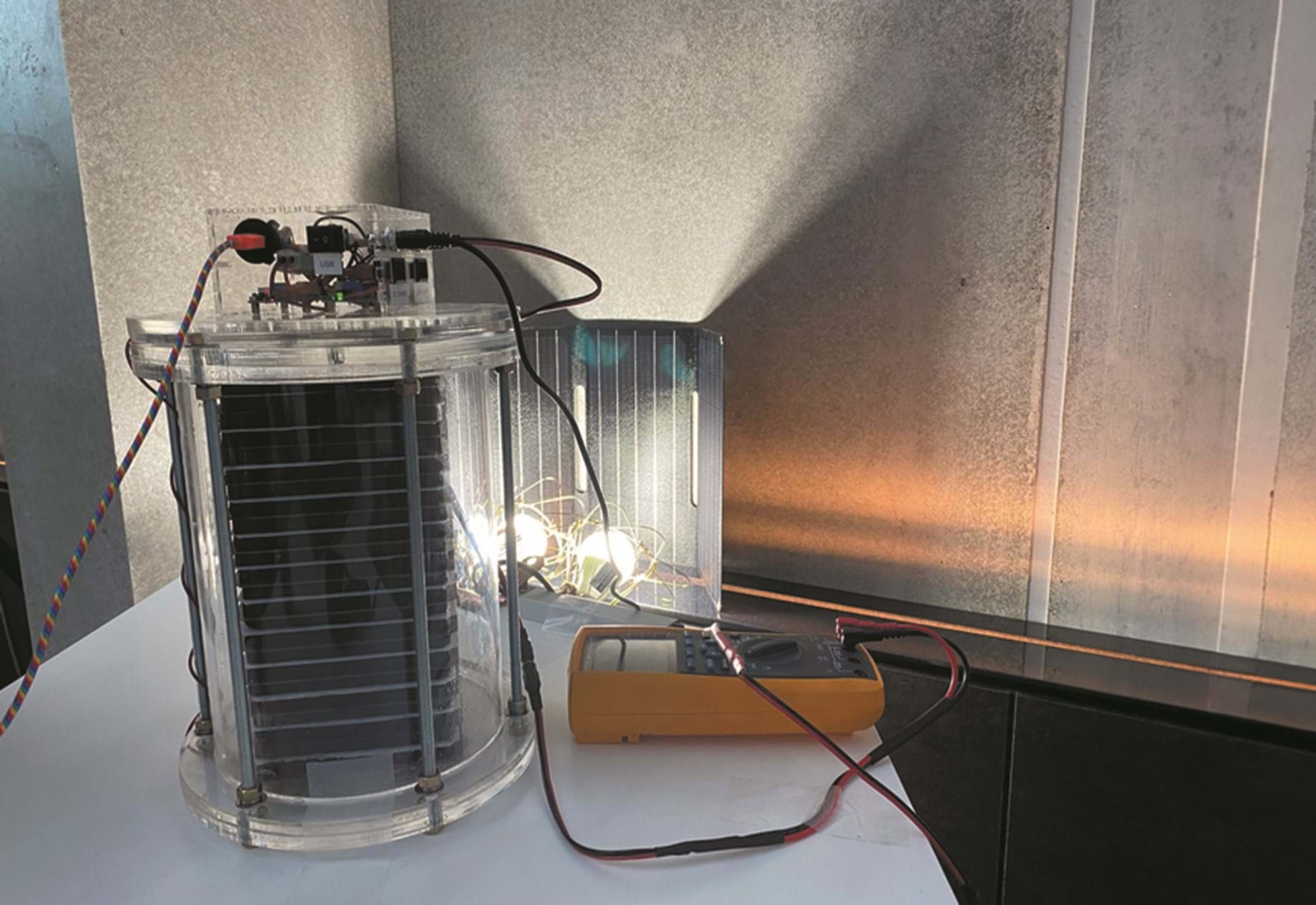
One example is the Massachusetts Institute of Technology (MIT) project. It recently showed that cement mixed with carbon black can function as a supercapacitor, storing and discharging electricity. The composite forms a conductive network within hydrated cement, enabling charge storage without compromising structural integrity.
In laboratory tests, this “concrete battery” material successfully stored and released energy, suggesting that future building foundations, roadways or wind turbine bases could double as distributed energy storage systems.
Admir Masic, a professor at MIT, says: “By creating concrete supercapacitors, we hope to extend the potential to create and store energy within concrete foundations – in this way, the concrete becomes multi-dimensional.”
He explains that supercapacitors housed within the concrete take in electrons on the carbon surface and release it over time back into the house – the amount of charge stored on the carbon surface determines the discharge profile. This, he says, is a much better solution than using batteries, which need a large amount of mineral input and have a limited lifespan compared to that of concrete, which can be several decades.
The implications could be significant both for remote or off-grid communities and for renewable energy systems where storage remains a critical constraint. Energy storage is one of the key bottlenecks in renewable integration. Grid-scale batteries require dedicated materials, space and capital investment. But if structural elements such as concrete, which are already required for buildings and infrastructure, can also provide storage capacity, the economics shift. It also aligns perfectly with net zero objectives. Infrastructure ceases to be merely a carbon liability and becomes part of the energy solution.
While commercialisation remains in early stages, the proof of concept from MIT could well be a pivotal moment. Concrete is no longer just about strength and durability; it may become part of the energy transition architecture itself.
"Evolving concrete in this way could mean durability and decarbonisation can converge to make it a ‘super material"
Next steps
While it would be premature to suggest that cities worldwide are being built from energy-storing, self-aware concrete, there is progression.
In the coming years, we are likely to see closer integration between smart materials, sensing technologies, IoT and data analytics. Structures will increasingly be designed not only to perform their original functions, but also to sense their own condition, generate useful operational data and adapt to become multi-functional.
First-generation self-healing materials have proved that autonomous repair was possible. The second generation is demonstrating that structural materials can be multi-functional platforms, combining sensing, energy storage, biological adaptation and carbon performance.
Marine self-healing and carbon capture
Hong Kong researchers are tackling the deterioration of concrete near the sea
Research groups at the Hong Kong University of Science and Technology and the University of Hong Kong are developing biomineralisation-based self-healing concretes designed specifically for marine durability.
The case use is compelling. In coastal cities, infrastructure faces constant assault from saltwater exposure and chloride penetration. Traditional reinforced concrete deteriorates rapidly in marine environments, with costly repair cycles an obligation.
These systems incorporate bacteria capable of precipitating calcium carbonate when cracks form. This bacteria activates upon water ingress, sealing fissures and restoring barrier protection around reinforcement.
What makes the Hong Kong research particularly interesting is its integration of recycled aggregates and carbon-mineralising processes. Some formulations are designed not only to resist marine degradation but to enhance carbon sequestration through mineral binding.
Recent research has estimated that cement materials globally absorbed around 0.93 Gt of CO2 in 2023 through carbonation processes, highlighting growing interest in concrete as a potential carbon sink as well as a carbon source.
The cost curve is also shifting. As digital monitoring becomes standard practice and carbon accounting tightens, the premium attached to smart materials narrows.
Kua Harn Wei concludes: “Ultimately, it depends on industry interest. Given the relatively higher costs of self-healing concrete, successful commercialisation requires demonstrating that its additional benefits can generate a reasonable revenue (or net present value of cost savings) to justify the higher investment. There also needs to be standards and regulatory consideration.”
Recent Editions
Catch up on the latest news, views and jobs from The Chemical Engineer. Below are the four latest issues. View a wider selection of the archive from within the Magazine section of this site.