Turkmenistan remains ‘hotspot’ for methane emissions, according to satellite data
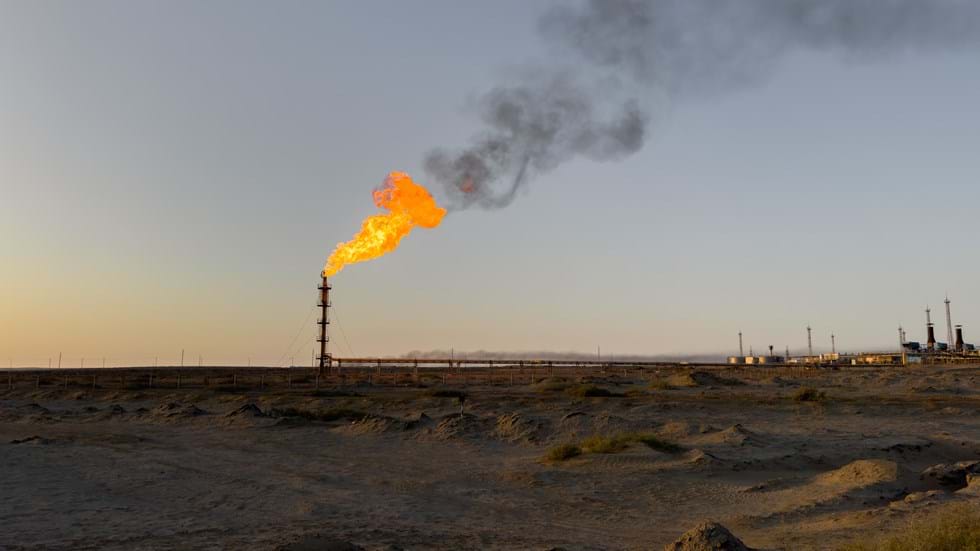
GLOBAL methane emissions from the oil and gas sector remain dominated by plumes from Turkmenistan, according to satellite measurements analysed by researchers in California.
Using open-access satellite data published by Carbon Mapper, a team at the University of California, Los Angeles (UCLA) identified the 25 most intense methane plumes originating from oil and gas facilities in 2025. Fifteen sites, including the top two, were located in Turkmenistan’s Balkan region on the Caspian Sea.
Date derived from Planet Labs’ Tanager-1 satellite and NASA’s EMIT instrument aboard the International Space Station recorded more than 4,400 plumes from over 2,400 oil and gas sites worldwide. The most intense methane plumes in 2025 were detected near Esenguly in Turkmenistan, with an average intensity of 10.5 t/hr, rising to 18 t/hr in December.
Of the remaining sites in UCLA’s list, five were in Venezuela, three in Iran, and one each in Texas and Pakistan.
According to the International Energy Agency’s (IEA) latest methane tracker, energy facilities in Turkmenistan released 5.5m t of methane in 2024 – the fifth highest globally after China, the US, Russia and Iran. However, of the top ten emitters, Turkmenistan’s emissions intensity of 1.03 kg/GJ was second only to Venezuela (1.14 kg/GJ). In comparison, China’s oil and gas emissions intensity was 0.12 kg/GJ.
UCLA said all 15 sites in Turkmenistan were almost certainly operated by state-owned companies Türkmengaz or Türkmennebit. The only known non-Turkmen operator in the region, Eni, confirmed it did not operate any of the sites identified.
Many of the plume coordinates lie in onshore fields in the Balkan region’s southwest. Several lie close to the route of the 200 km Korpeje-Kordkuy pipeline transporting gas from the Korpeje field to northern Iran.
UCLA researcher Cara Horowitz told the Guardian the most intense plumes were likely a result of poor maintenance. “If you upgraded the infrastructure a little bit, did good housekeeping, you could solve a really important part of the problem,” she said. “We’re hoping that by bringing visibility to these major issues, we will help increase public and political pressure to do something.”
Türkmengaz and Türkmennebit were approached for comment.
Methane sources
Turkmenistan holds some of the largest natural gas reserves in the world, with analysts estimating it holds up to 10% of global supply. Officials in the country have repeatedly called for a new Trans-Caspian pipeline to Europe to fill the void left by Russian gas following the invasion of Ukraine.
However, the country has long been one of the worst methane emitters. Analysis in 2022 by Spanish and Dutch researchers described the west coast of Turkmenistan as a “methane hotspot”. The researchers found the majority of methane plumes were from inactive flares venting gas at oil fields, while a small number were likely caused by leaks from the pipeline network, which the researchers highlighted was “characterised by its old and inefficient equipment”.
Globally, the IEA said 85% of the 81m t of methane emissions in 2024 were from upstream operations, while 2m t came from leaks in end-use equipment.
The 2022 paper also found that while flaring across the South Caspian Basin had gradually decreased over the previous decade, this had come “at the expense of an increase in venting”.
Recent Editions
Catch up on the latest news, views and jobs from The Chemical Engineer. Below are the four latest issues. View a wider selection of the archive from within the Magazine section of this site.