Stanford researchers fight viruses with AI
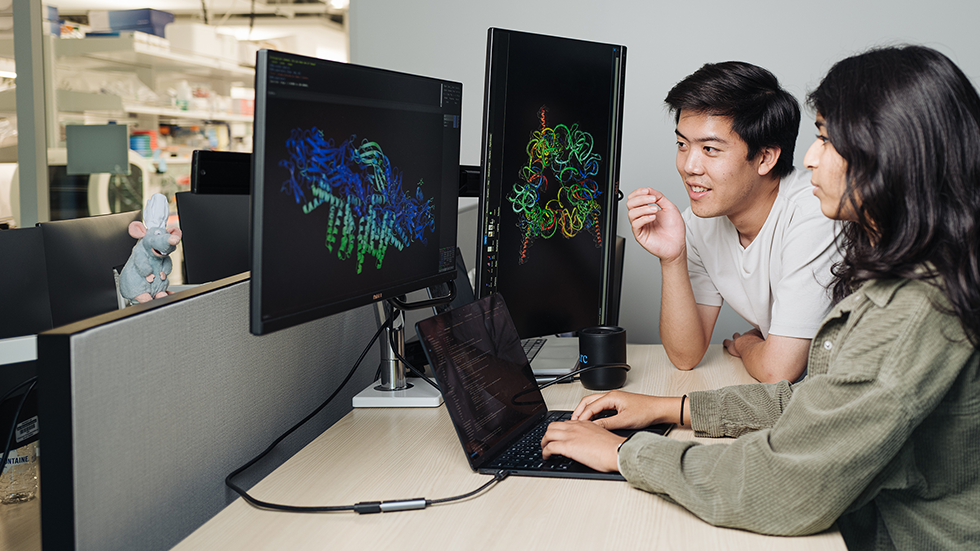
A CHEMICAL engineer and a bioengineering graduate student from Stanford University have developed a generative AI model that can develop new viruses to kill bacteria and fight against antibiotic resistance.
Brian Hie and Samuel King have developed 16 “exceptionally good” E. coli killing viruses, called bacteriophages, using their AI model Evo 2.
E. coli can cause severe illness and death in humans, and has historically been treated with antibiotics. However, over time the bacteria can form resistance to heavily used antibiotics, making treatments ineffective.
The Stanford team looked to solve this problem through feeding its AI model a specific bacteriophage called ΦX174, to allow it to write several new genomes to kill bacteria.
From computer to lab
Taking the genomes that Evo 2 wrote, Hie and King said they were able to synthesise nearly 300 different viruses to test against E. coli, narrowing it down to 16 of the most effective.
Chemical engineer Hie said: “If the bacteria gains resistance to a single phage, it’s game over for the medication.”
He added: “But if you have multiple genetically distinct phages in a mixture, it would be harder for the bacteria to develop resistance to the entire cocktail.”
The team have developed a proof-of-concept in their study, showing the effectiveness of their 16 bacteriophages in overcoming resistance to E. coli that is immune to native ΦX174.
King explains the need for AI in this research, and wider research on resistance resistant antibiotics, is down to the complexity of designing entire genomes.
The genome for ΦX174 is just under 6,000 base pairs long, and though shorter compared to the 3 billion base pairs of the human genome, it still requires a lot of time and money to manually analyse and synthesis each DNA string.
Evo 2, which was developed by King, was able to do the heavy lifting in DNA synthesis while also suggesting points of suggestion for Hie and King to investigate what traits the genome should have to be an effective virus.
Open access
Hie and King have made Evo 2 open source and free of charge, so anyone is able to use it to design new genomes.
While the team acknowledged that this access could attract bad actors who may use the model to create new disease, Hie explained that safety checks could be built into the model.
He added that Evo 2 and similar AI-enabled tools provided humans with a “powerful advantage” in protecting humans from naturally occurring pandemics and man-made biological threats.
Hie is now looking at how to extend the use of Evo 2 in creating more bacteriophages. He is also looking for longer and more complex DNA and genomes that can be used to develop useful chemicals and fuels.
Recent Editions
Catch up on the latest news, views and jobs from The Chemical Engineer. Below are the four latest issues. View a wider selection of the archive from within the Magazine section of this site.