Chinese coal mine owner blamed for explosion that killed 82
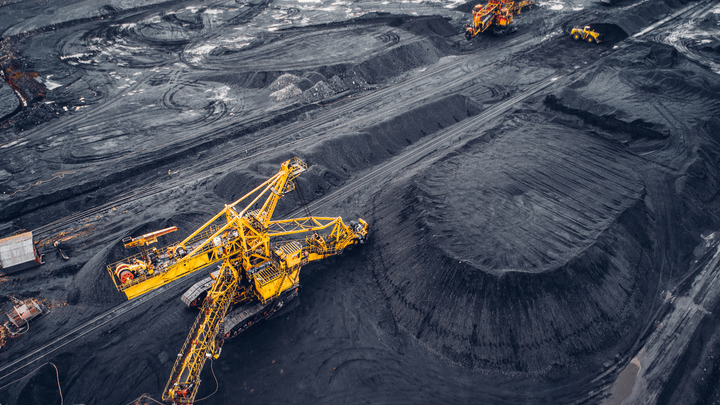
CHINESE authorities have accused the owner of a coal mine in the Shanxi Province for a gas explosion that killed at least 82 people.
Two days after the incident at the Liushenyu mine on 22 May and following initial investigations, Chinese officials declared that the mine’s owner, the Tongzhou Group, had committed “serious violations of laws”, where figures in the company had been “placed under control”.
The cause of the explosion is currently being investigated, although state media reported that carbon monoxide levels had “exceeded limits”, with over 120 people requiring hospital treatment, including two in critical condition. Two people are still missing.
Although the gas that caused the explosion has not been specified, experts suggest it is highly likely to be methane. Neil Millar, director of Australia-based seismic survey provider Total Seismic, told TCE “there will be small concentrations of methane in any coal mine”, but only above certain concentrations will it explode.
“When it is subjected to pressure and heat, methane condenses in the coal”, he added. In addition, “there’s an attracting adsorbing bond that attracts methane to the coal lattice, which can make methane concentrations much higher than pure methane at the same pressure.”
The latest incident was the first mining disaster in China since 2009 when a gas explosion in a coal mine in the Heilongjiang province killed 108 people. Between 2000 and 2005, five gas explosions in coal mines across China killed a total of 860 people. While standards are thought to have improved over the last decade, Chinese coal mines remain among the largest sources of methane leaks in the world. According to the UN Environment Programme’s latest analysis of satellite data, 18 of the top 50 methane “super-emitters” in the world are likely to be coal mines in Shanxi, which produces around one quarter of China’s total coal output.
According to state-owned news agency Xinhua, a meeting convened yesterday to launch a full investigation into the incident stressed the importance of determining responsibilities of regulators, local authorities and operators, and called for “strict punishment” for those found to be at fault.
Heavy criticism has already been directed at Tungzhou, who initially reported an incorrect death toll of more than 90, due to “chaos at the scene and the company’s failure to provide the accurate headcount of workers on duty”, Xinhua reported. Some workers also did not bring mandatory tracking devices into the mine, while blueprints submitted to authorities differed from the real conditions, the agency added.
Liushenyu was found by authorities to be a “severe” safety hazard in 2024, while Tongzhou reportedly received two administrative penalties in 2025 for safety violations.
Tongzhou could not be reached for comment.
‘Safety overhaul’
Production at all four mines in Shanxi operated by Tongzhou has been suspended, in preparation of what Xinhua reported as a “safety overhaul”, citing a press conference given by mayor of Chanzhi Chen Xiangyang on Saturday.
Millar said that safety regulations and culture “completely changed” in Queensland, Australia, following a methane explosion in 1986 at the Moura coal mine, and wondered whether the latest incident in China would have a similar effect. “Since [1986], the Queensland coal mining industry safety performance has improved greatly…will the Chinese government have the same kind of time out?” He added that any such safety overhaul might “provide commercial opportunities for chemical engineers and bioscientists".
Recent Editions
Catch up on the latest news, views and jobs from The Chemical Engineer. Below are the four latest issues. View a wider selection of the archive from within the Magazine section of this site.