Trinidad and Tobago: Ten years on
A decade after joining IChemE, the Trinidad and Tobago Member Group has grown into a vital professional network linking industry, academia and the next generation of chemical engineers. Aniqah Majid explores how it was built – and what comes next
TRINIDAD AND TOBAGO’S identity as an energy nation runs deep. Since the country’s first oil well was drilled in 1857, hydrocarbons and downstream industries such as ammonia production have shaped both its economy and its engineering talent. Ten years ago, that industrial legacy found a new professional anchor when Trinidad and Tobago formally joined IChemE and established its own member group.
Founded in 2015, the Trinidad and Tobago Member Group (TTMG) was created to support the country’s chemical engineers, strengthen links between industry and academia and ensure the profession’s contribution was visible both locally and internationally. A decade on, the group has grown into a focal point for professional development, mentoring and student engagement – and offers a case study in how strong engineering communities can be built in smaller but strategically important regions.
Laying the foundations
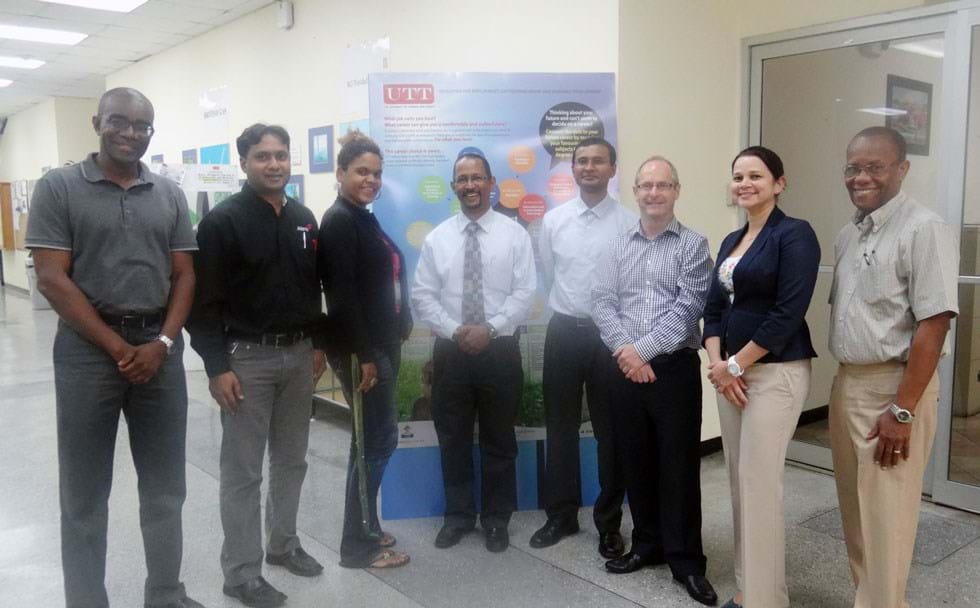
The idea for a Trinidad and Tobago member group emerged in 2014, during a meeting at the University of Trinidad and Tobago (UTT) campus, when current IChemE president Raffaella Ocone brought together more than 60 IChemE members and engineers to discuss the region’s distinctive industrial landscape.
“That was the first time I was in a room with so many chemical engineers and I will never forget it,” recalls Marian Watson, a programme leader at UTT and one of the founding members of the TTMG.
“It was mind-blowing, [Ocone] put forward the idea for a member group as by that time, we had two universities who had accredited chemical engineering programmes and a vibrant industry – a wonderful time for chemical engineering. We had set up a steering committee in September and officially launched the member group in October 2015.”
Other formative members included Maurice Massiah, Christopher Farquhar and Canute Hudson – all process engineers with decades in the oil and gas sector.
Before the group existed, IChemE membership in Trinidad and Tobago was largely driven by multinational operators such as bp, Shell and Atlantic LNG, which encouraged engineers to pursue Chartership. The member group helped broaden that engagement, creating a shared forum that reflected the country’s close-knit links between academia and industry.
That connection was already visible during IChemE accreditation visits, when current TTMG chair Astor Harris invited assessors to tour Phoenix Park Gas Processing Limited, then one of the largest gas plants in the western hemisphere.
“The reason I invited IChemE to the plant wasn’t to show off its size,” says Harris “But because we had hired a lot of the students from UTT in the operations department and we wanted to show the close interaction we had with UTT and industry.”
Ocone adds: “It was clear that there was a strong appetite for a forum in which chemical engineers could come together, collaborate and ensure their collective voice was heard.”
Nurturing networks
From its early days, nurturing professional relationships has been central to the TTMG’s mission – between other IChemE member groups, industry and academia.
The Association of Professional Engineers of Trinidad and Tobago (APETT) played a key role in the group’s early growth, acting as a bridge to industry and academia. That relationship continues today, with many engineers active in both organisations.
Support also came from other member groups within IChemE.
“I leaned heavily on the Aberdeen Member Group,” says Massiah. “And then there was also a Gulf Coast Member Group that was based in Houston and we sort of partnered with them because they were in the initial stages just like us.”
Mentorship has become one of the TTMG’s most important activities. Its programme links students and early-career engineers with experienced professionals across the energy and process industries.
Wayne Mohan, a process safety specialist and IChemE Fellow, has been an active mentor for several years.
“I want professionals to grow and understand that there are people in the industry who can help them,” he says.
“TTMG is important because it allows young professionals to be a part of something bigger than their jobs.”
Hudson says the mentor programme encourages lifelong connections and the tools for young engineers to grow a network early in their careers.
“The students are grateful to be able to have access to somebody with more experience and understand that they are not alone.”

Growing the next generation
Student membership has expanded significantly over the past decade, with students now making up more than half of the TTMG’s members. IChemE accreditation of both UTT and the University of the West Indies has helped strengthen ties, alongside encouragement for students to take part in international competitions and events.
Ejae John, an associate professor of process engineering at UTT, says students are increasingly confident in putting themselves forward. Initiatives such as the Young Engineers Awards for Innovation and Sustainability (YEAIS) have been particularly influential and UTT plans to submit several student design projects to the 2026 competition.
That confidence is reflected in recent success stories. Abigail Clarke, a UWI graduate now working at Shell, won a YEAIS award last year for her project on improving oilfield efficiency using digitalisation.
“When I first heard about the YEAIS I thought I wouldn’t do it because nothing that I had done felt big enough,” she says.
“But I was convinced by the TTMG and it ended up being an amazing experience.”
Looking ahead
As Trinidad and Tobago explores new directions in hydrogen, renewables and digitalisation, the TTMG sees its role expanding. Harris says the group is developing a strategic roadmap to guide its next phase, including improving access to shared resources across IChemE.
For management committee chair Shantal Ramdeo, the aim is to ensure Trinidad and Tobago’s engineers are visible on the global stage.
She says: “Trinidad and Tobago is an eclectic and diverse culture, and not just in oil and gas, but across engineering disciplines.”
Ten years after its launch, the Trinidad and Tobago Member Group has moved well beyond its formative stage. What began as a conversation in a university meeting room has become a sustained professional network, rooted in local industry but outward-looking in ambition. For IChemE – and for other regions seeking to build resilient engineering communities – its story offers valuable lessons in connection, collaboration and continuity.
Find out more about the Trinidad and Tobago Member Group at bit.ly/icheme-trinidad-and-tobago
Recent Editions
Catch up on the latest news, views and jobs from The Chemical Engineer. Below are the four latest issues. View a wider selection of the archive from within the Magazine section of this site.