From Shovel to Scale
Students brewing beer in a Newcastle-upon-Tyne car park speak to Sam Baker after trading muscles for machinery to scale up their homegrown stout for the first time
“IN BREWING, you actually see how things come together,” says Kypros Iakovou, reflecting on how making beer complemented his chemical engineering undergraduate degree at Newcastle University in the UK. “How you extract the sugars, how you boil off some of the nasty stuff that you don’t really want in your main product and then how heat exchange and mass transfer happens across the different units.”
Now a PhD student, Iakovou sits on the committee of StuBrew – a commercial, student-run brewery owned by the university’s School of Engineering. With a production capacity of six barrels per brew, or around 1,000 L, and regular orders from the students’ union bar and local pubs, the team is keen to dispel the idea that it is “just some students making beer in a bathtub”, as committee president Will Tyson puts it.
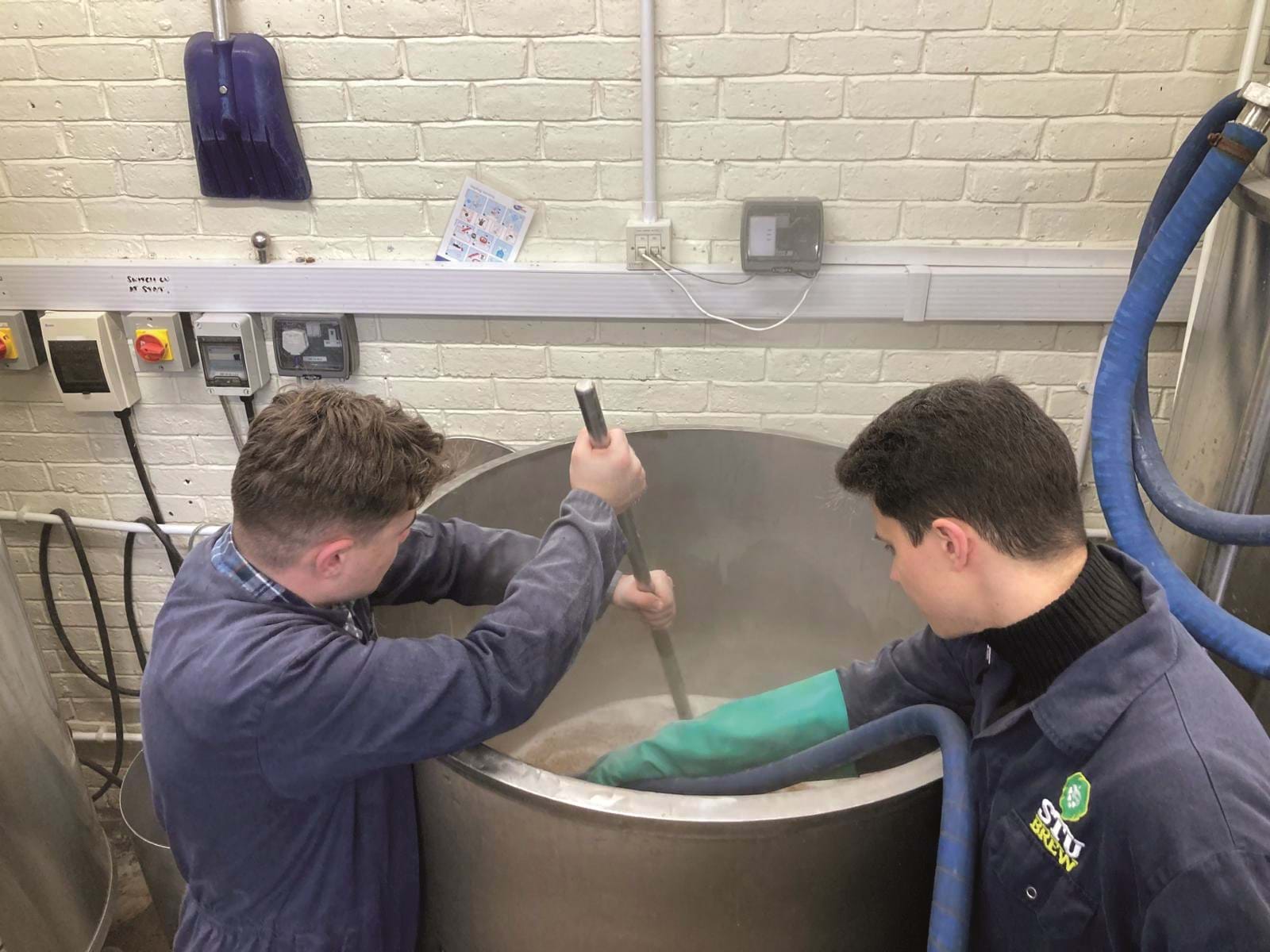
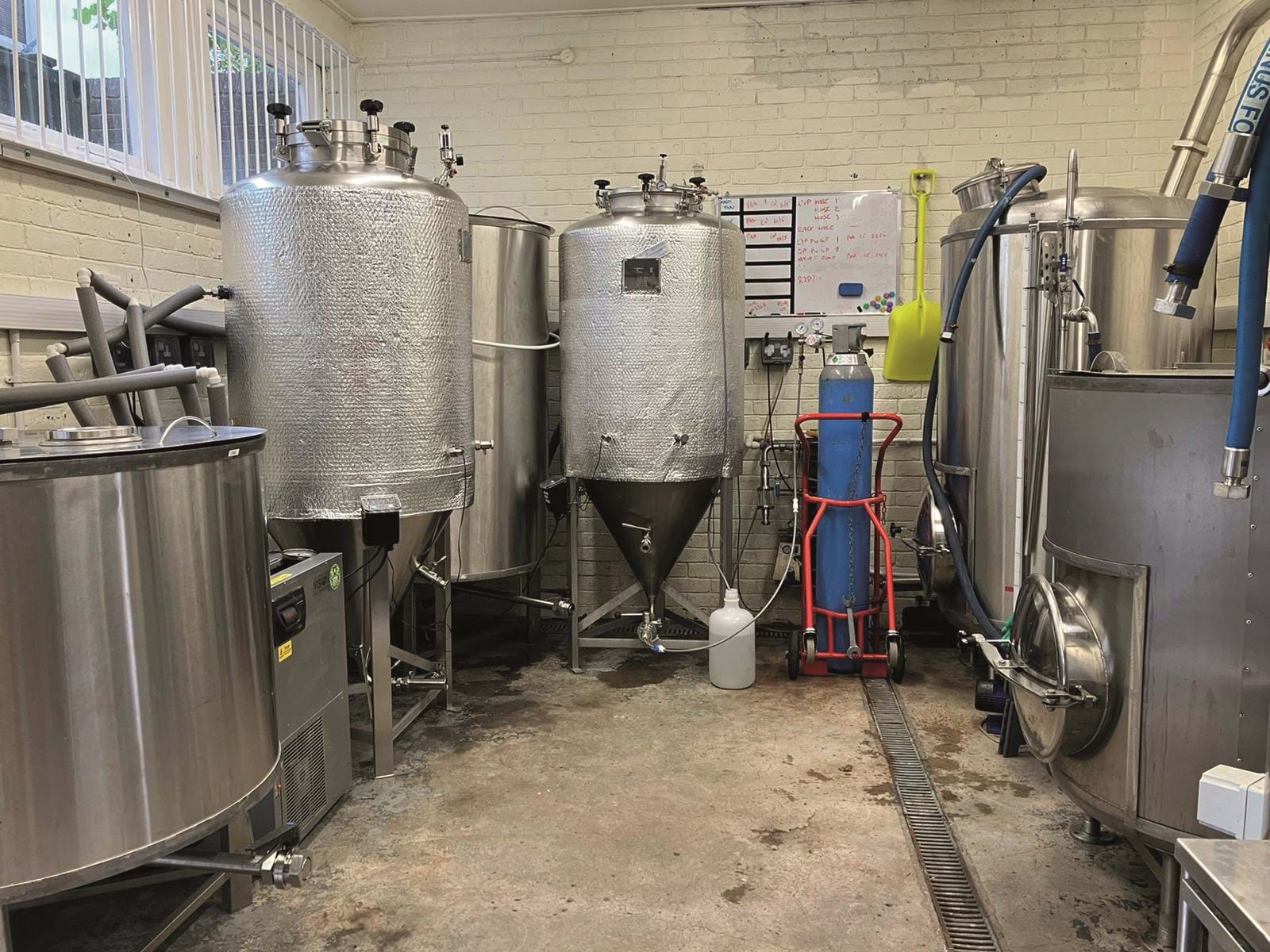
StuBrew’s facilities may be more industrial than a halls of residence bathroom but they are still a world away from large-scale breweries. In keeping with craft ale traditions, brewing takes place in a small outhouse in a car park behind the chemical engineering department. On fortnightly brewing days, students produce the mash – a mixture of malted grain and hot water.
This is prepared in a mash tun, a vessel where enzymes break down starches in the grain into fermentable sugars, creating the liquid that will eventually become beer. “This is probably the most intensive part of the brewing,” says Lawrie Shrimpton, one of StuBrew’s part-time brewers. “We tend to have one person controlling how much water is added, another person is pouring in the big sacks of malt at a steady rate and somebody else is mixing it all in.”
Battle of the beers
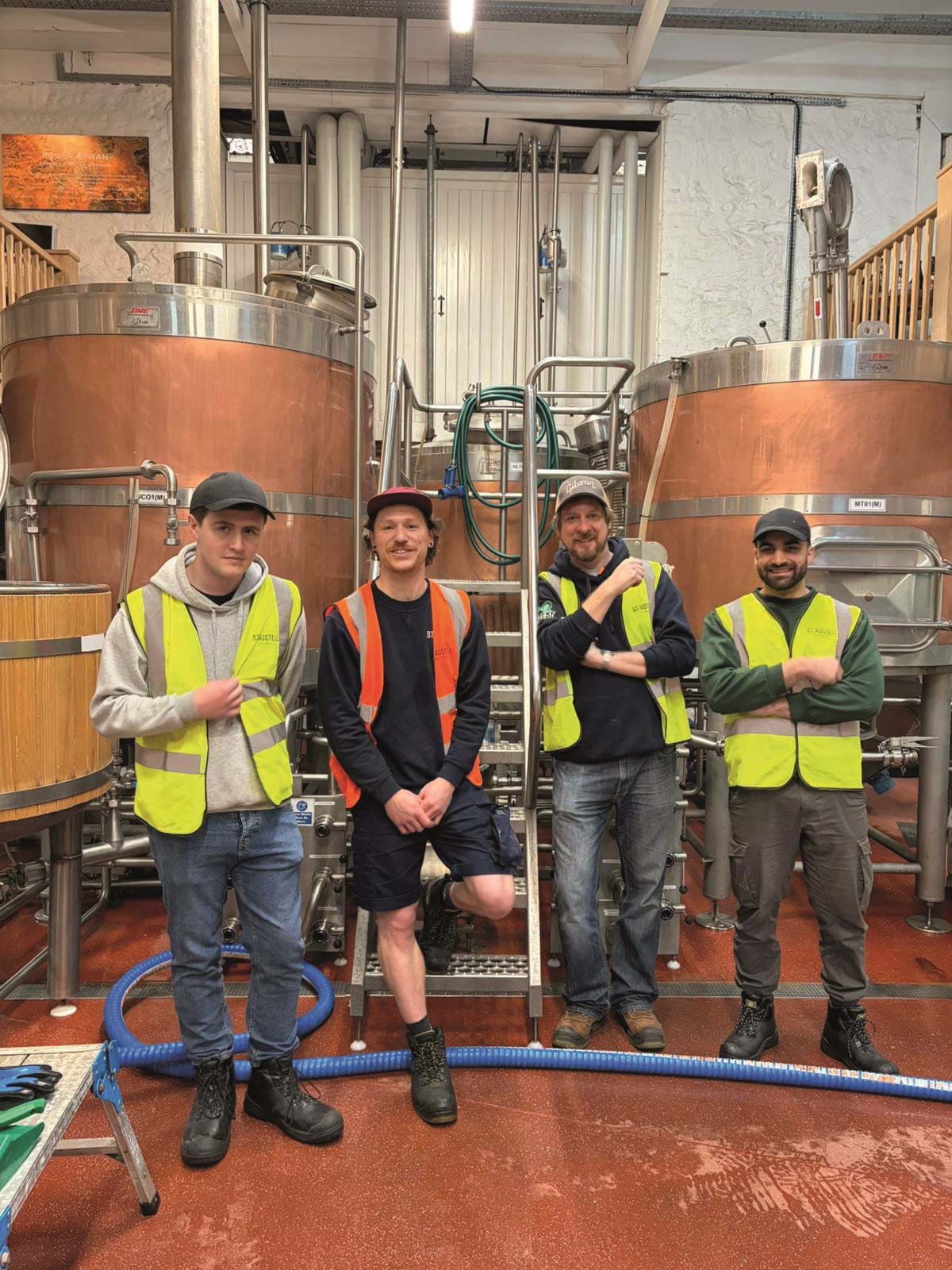
StuBrew’s best-selling beer is Exam Room Tears (ERT), a pecan and maple stout developed in 2019 for a local “battle of the beers” competition. When pub chain Wetherspoon’s – which runs the students’ union bar and already has a standing order for ERT – requested 20,000 L for their 2026 beer festival, the students faced a choice: spend two years brewing it themselves or scale up.
They chose the latter, partnering with St Austell Brewery in Cornwall, the UK’s largest independent brewery, to produce 25,000 L in time for the festival. “It was a beer we could easily scale up,” says Tyson, who joined Iakovou and StuBrew founder Chris O’Malley, a chemical engineering professor at Newcastle University, for the production run.
Not all beers would have translated so well. Hoppier beers, like StuBrew’s Lab Session pale ale rely on delicate aroma compounds that are harder to replicate at scale. “You can’t really quantify” the aroma profile hops give a beer, Tyson says, making it difficult to predict how it will evolve. Bitterness can be measured and adjusted, Tyson explains, but aroma is less predictable. Hops are also expensive, Shrimpton adds, “and the availability of hops in that quantity is hard to get your hands on”.
Recent Editions
Catch up on the latest news, views and jobs from The Chemical Engineer. Below are the four latest issues. View a wider selection of the archive from within the Magazine section of this site.