A Week in the Life 1: Water
Kicking off our series in which we explore a typical working week for members of IChemE special interest groups (SIGs)
Hi, I’m Will Ryden, a graduate process engineer and project leader at Mott MacDonald Bentley (MMB). I work in the UK wastewater sector, designing and managing the construction of large‑scale sewage treatment upgrade works across the Severn Trent Water region. Outside of work, you’ll usually find me running around Birmingham, at a gig, or occasionally doing both, depending on the energy levels of the bands I’m seeing. I want to take you through a week in my working life. It’s a job I’ve been doing for nearly three years now, in a team that supports me, at a company that wants me to succeed, and most importantly, in a sector crying out for new, passionate chemical engineers.
In March, I attended the International Water Association’s Young Water Professionals conference in Birmingham. It was a fantastic few days. There was a room full of immensely talented young chemical engineers (and me), and it was refreshing to step away from my projects and talk about the sector as a whole. Alongside presentations on very real and pressing topics, such as determining N2O emissions and tackling pollution at Lake Windermere, there were several talks highlighting the skills gap facing the water sector.
Around 20% of the workforce is expected to retire within the next four years, while capacity requirements are predicted to grow by 27% in the same period, equating to more than 43,000 additional people, if I remember the slides correctly. The challenge is clear, but so is the opportunity. By sharing a snapshot of the work available within the sector, I hope that even just one young chemical engineer might read this and consider helping to tackle what is, for me, the most important sector and IChemE priority topic in the UK right now: water.
Chemical engineering opens the door to global travel and adventure. On Monday, for me, that door was the gate to a sewage works near Alfreton in Derbyshire. Less than two years into my career at MMB, I am project leader of over £10m (US$13.5m) worth of wastewater treatment upgrade projects. The works I was reviewing on behalf of our client, Severn Trent Water, aim to meet a strict phosphorus discharge limit (0.4 mg/L) at the outfall, reducing eutrophication in the watercourse, a process you may remember from GCSE biology.
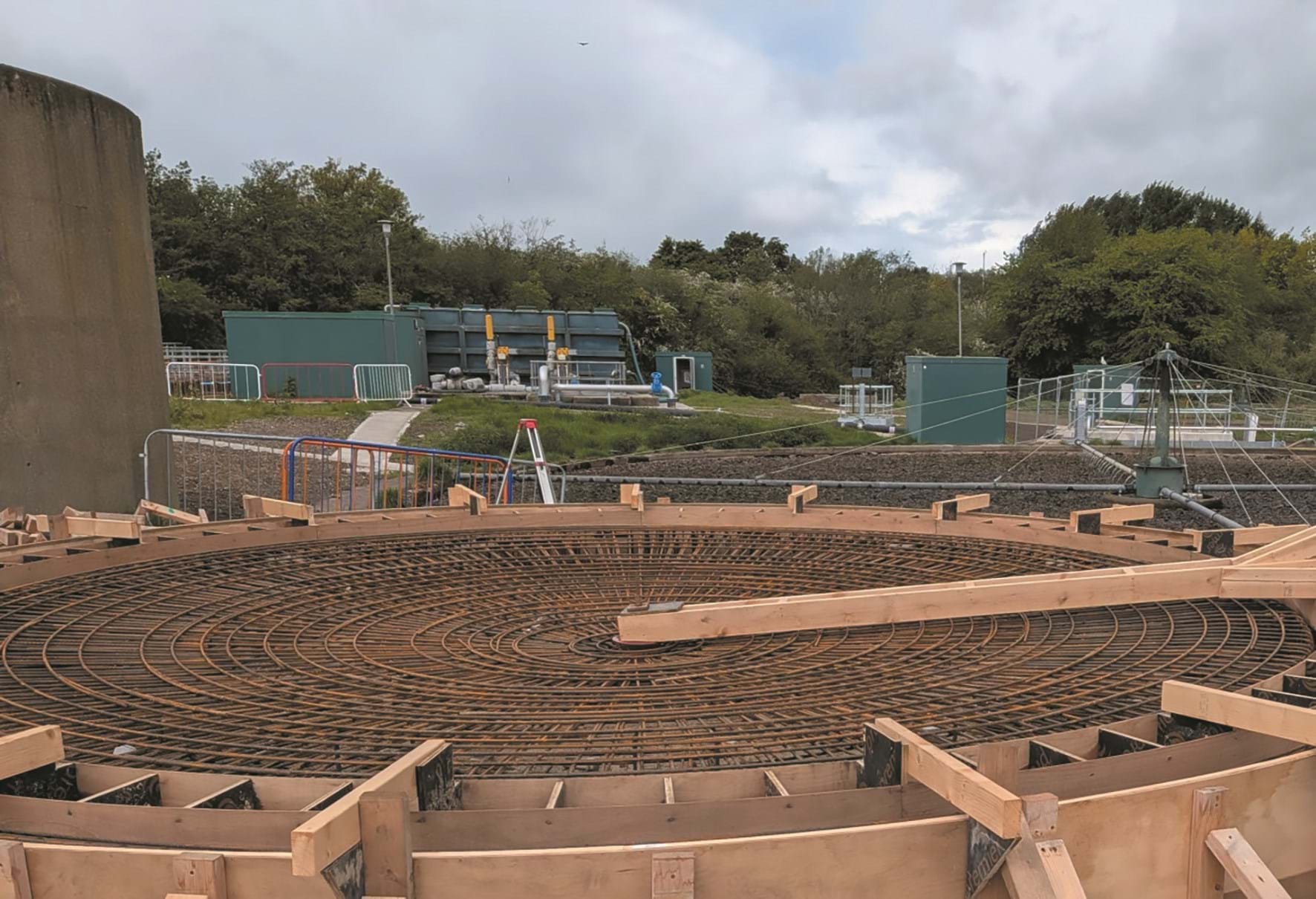
I’m responsible for managing the design of new civil infrastructure at the site, and that day included an on‑site meeting with the contracts manager and site manager to plan the remaining works. We carried out a site walkover, mercifully, in sunshine for the first time this year, reviewing new primary settlement tanks designed to remove solids – and with them phosphorus – alongside discussions on access and maintenance requirements. We finished by agreeing an approach for the surrounding walkway design.
One of the best aspects of MMB being a design‑and‑build contractor is that I don’t just design assets and hand them over to someone else to construct. I get to watch something I helped draw come to life, week by week and that’s incredibly rewarding.
Tuesday and Wednesday were spent back in the Shifnal office in Shropshire, which serves as MMB’s Severn Trent regional base. I split my time between two projects I lead and around six others where I act as the designated process engineer. One highlight was watching a more junior graduate process engineer present her commissioning sequence for a first‑of‑its‑kind alternating enhanced biological phosphorus removal (EBPR) “Oxibox” system. The level of detail, understanding and pride she showed in her work was genuinely refreshing.
A sector facing major demand

I’m also the Early Career Professional (ECP) lead for our internal Nutrient Removal and Recovery practice group and I chaired that month’s additional call, featuring Chandler Johnson from World Water Works, who spoke about their DETOUR process for wastewater treatment. Taking time away from immediate project pressures to explore emerging technologies is always welcome and, given the global nature of our work, a regular feature of life at MMB. Thursday was different again. I spent the day in Mott MacDonald’s Birmingham office. Key observations included a far superior lunchtime meal‑deal selection within a five‑minute radius compared to Shifnal, but, in my professional opinion, a woeful choice of teabags. That evening, I attended IChemE’s ChemEngDay UK & Ireland at the University of Birmingham, sitting on a panel titled Early Career Perspectives on Priority Topics, hosted by Daniel Rhymer for the IChemE National Early Careers Group.
During the session, Daniel displayed a poll asking which IChemE priority topic presents the greatest challenge for chemical engineers in reaching net zero.
Water and sanitation received 0%.
Not one early‑career chemical engineer in the room considered the sector that I and thousands of others work in to be a key net‑zero challenge. This echoed the discussions I’d heard at the IWA conference. The sector appears undesirable to some, or simply less relevant to today’s global challenges, but I believe that perception couldn’t be further from the truth.
I spoke to the audience about how it’s not just headline‑grabbing stories about combined sewer overflow (CSO) spills and sewage in rivers. Clean water supply is a challenge too. The Strategic Pipeline Alliance project, for example, is a major UK infrastructure scheme transporting water from Hull to Essex to address water scarcity in a country we often assume is immune to drought and climate change. We don’t just need to work smarter; we need to grow the workforce to deliver the infrastructure required to sustain our way of life.
Why water matters
I rounded off both the week and this piece with a great Friday at De Montfort University, supporting the EDT Gold workshop for a school I’ve been mentoring through our STEM outreach programme. The students built 3D‑printed settlement tanks to model how solids settle out of water – known as clarification – and learned to simulate them using ANSYS software. Their physical models were arguably better than those on my project earlier in the week, so hopefully their time with us inspires them to join the sector, just as I hope this article inspires you.
That evening, I headed to Nottingham to perform a comedy gig in the city centre. It was the best of my illustrious ten‑gig career so far, helped by the presence of my partner Airelle, my brother Patrick, and, astonishingly, up to eight friends in the audience. Most importantly, 50% of the audience laughed half the time.
How can you learn more? Well, I’m on LinkedIn if you’d like to know more about the work I’m doing at MMB. I’m always happy to chat. For now, take care, and I’m looking forward to whatever projects head my way next.
IChemE’s Water Special Interest Group provides an international forum for those interested in the treatment of water and wastewater to discuss views and ideas and encourage education at all levels: www.icheme.org/water
Recent Editions
Catch up on the latest news, views and jobs from The Chemical Engineer. Below are the four latest issues. View a wider selection of the archive from within the Magazine section of this site.