UK nuclear jobs at record high as figures show over 100,000 in sector
THE NUMBER of people working in the UK’s civil nuclear industry has reached a record high, rising above 100,000 for the first time ever, figures reveal.
According to the Nuclear Industry Association (NIA) trade group’s annual “jobs map”, the workforce has grown by 67% since 2021 to 102,606 currently, and includes roles in construction, R&D and decommissioning. The NIA attributed the growth primarily to construction of the new Hinkley Point C reactor in Somerset. Hinkley Point A and B reactors are currently undergoing decommissioning.
Tom Greatrex, chief executive of the NIA, said: “Nuclear’s unique footprint creates tens of thousands of highly skilled jobs in every part of this country, especially in coastal communities that need them most.”
Last year, the UK was dubbed the “most expensive country in the world” to develop nuclear projects owing to regulation that industry has long argued is overly conservative. Then-prime minister Sir Keir Starmer responded by promising to reform safety and environmental regulations by the end of 2027.
Greatrex added: “It is now critical that the UK government implements reforms of nuclear regulation in full to unlock further growth and job creation while cutting the cost and schedule of new nuclear projects. Achieving this is essential for our energy security.”
Over 64,000 nuclear jobs are spread between the Southwest, where Hinkley Point and the retired Oldbury power station are located, and the Northwest, home to the Heysham power plant, whose two reactors will be online until 2030, and Sellafield, a former power station that now serves as the world’s single largest deposit for radioactive spent nuclear fuel.
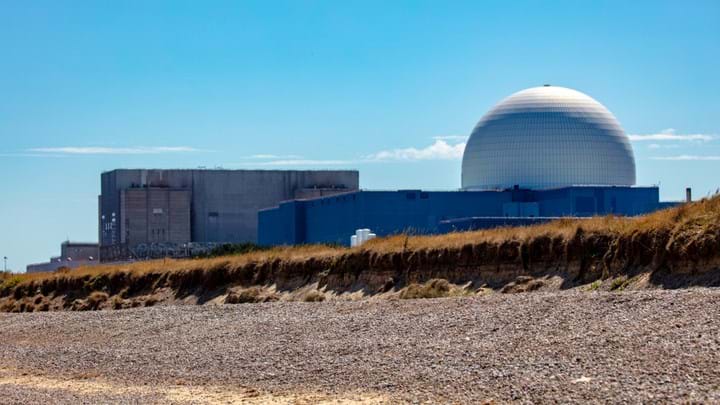
The East of England, home to the generating Sizewell B reactor and a planned third reactor, saw the number of nuclear jobs nearly double year-on-year to over 4,700.
Currently, the UK has five generating fission reactors. The four ageing advanced gas-cooled reactors, including the Hartlepool and Torness power stations and the two reactors at Heysham, are scheduled to enter decommissioning in 2030 following lifetime extensions agreed in late 2024. The more modern pressurised water reactor at Sizewell B will generate electricity until at least 2055, following a 20-year lifetime extension agreed in July.
In addition to new reactors at Sizewell and Hinkley Point, the latter of which has suffered multiple delays and is unlikely to come online this decade, Rolls-Royce’s small modular reactor development in Wylfa, North Wales, is expected to generate power from the mid-2030s.
Recent Editions
Catch up on the latest news, views and jobs from The Chemical Engineer. Below are the four latest issues. View a wider selection of the archive from within the Magazine section of this site.