NASA reviews moon rocket Artemis II amid helium flow issues
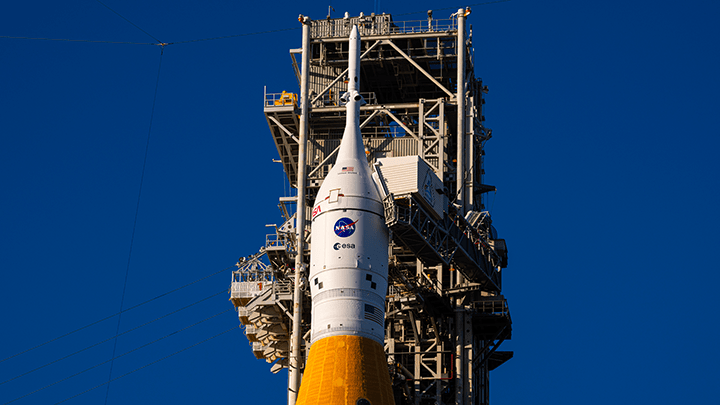
NASA’S ARTEMIS II is being wheeled back in for repair because a disruption of helium flow to the moon rocket’s space launch system (SLS) is impairing its ability to lift off.
The Artemis II mission will launch four astronauts into space to journey around the moon and back to Earth – making it the first mission to do so in more than half a century.
NASA is now moving the rocket from the launch pad to the Vehicle Assembly Building for tests, a journey expected to take up to 12 hours.
Helium need
At a rocket’s propulsion stage, helium is needed to maintain the proper environmental conditions for propulsion engines and to pressurise liquid hydrogen and liquid oxygen propellant tanks.
NASA says that the propulsion system was successful in previous ‘wet’ dress rehearsals, but flow disruptions arose in normal operations and during reconfigurations performed last week.
Helium flow and pressurisation issues also occurred in the 2022 Artemis I issue, with NASA implying that the disruption could have been caused by a valve in the interface between ground and rocket lines used to route helium.
Better safe
While troubleshooting the helium flow, NASA says it will also replace the batteries in the flight termination system, with several tests set to occur on the rocket before liftoff.
The launch was expected to occur next month but is now slated for April.
Recent Editions
Catch up on the latest news, views and jobs from The Chemical Engineer. Below are the four latest issues. View a wider selection of the archive from within the Magazine section of this site.