LNG Canada to expand operation and double international natural gas exports
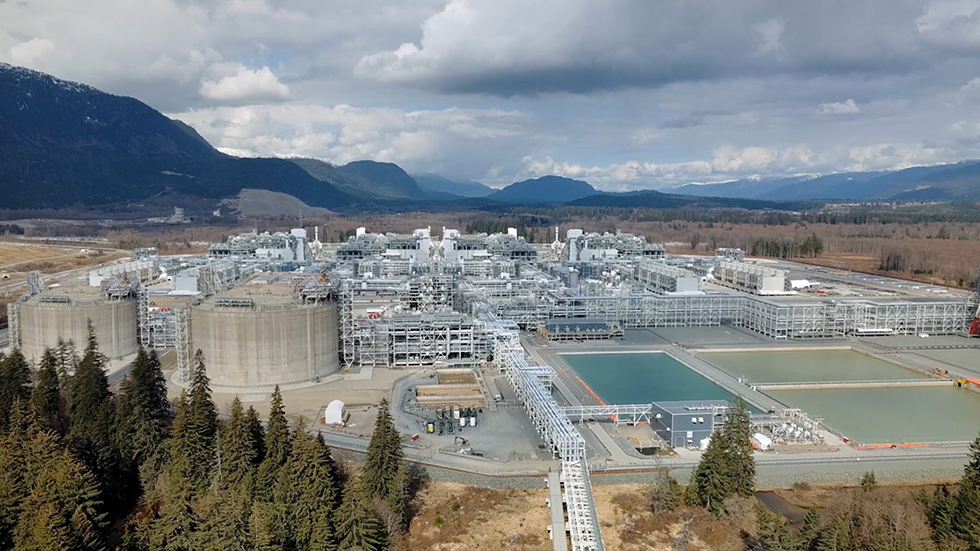
Led by a consortium of global energy companies, LNG Canada is set to move into its Phase 2 expansion project, which will double its liquified natural gas (LNG) export capacity from 14m t/y to 28m t/y.
LNG Canada is a joint venture including Petronas, PetroChina and Mitsubishi Corporation, and led by Shell. The project was created to develop Canada’s international LNG export industry.
The project, which is based in British Columbia, has been in development for more than a decade, with Phase 1 exporting Canada’s first-ever shipment of LNG last year to South Korea.
With its 40-year export license, LNG Canada expects the phase to produce around 28m t/y of LNG exports, generating around $50bn for the Canadian economy.
Location, location, location
Canada has several LNG export projects based in British Columbia. The region has the second largest natural gas reserves in Canada, with the country as a whole ranking 10th in largest global reserves.
The country’s LNG exports were minimal before 2025, with virtually all exports going to the neighbouring US in 2024, according to the Canada Energy Regulator.
Now, Canada has seven projects dedicated to LNG exports, representing a capital investment of almost $109bn and a potential production capacity of 50.3m t/y.
British Columbia is strategically positioned to be within reasonable shipping distance from Asia, and LNG Canada said that its production location in Kitimat is particularly beneficial with its connection to existing infrastructure, including pipelines and and roads, and connection to local governments.
LNG Canada also operates on the traditional territory of the Haisla people, an indigenous First Nation from the Kitimat region, with a population of around 2,000 people. LNG Canada said that it is working with the Haisla Nation and the project, and has developed an equity agreement with five First Nations, representing “one of the largest Indigenous ownership positions in major Canadian infrastructure”.
Canadian jobs
The expansive Phase 2 project is expected to support 4,000 jobs during construction, with the whole project requiring “tens of thousands” of skilled workers.
Currently, the facility supports more than 400 full-time jobs, with Phase 2 expected to add 90 full-time roles, and 150 contractors.
Chris Cooper, the president and CEO of LNG Canada, said: “LNG Canada Phase 2 is another nation-building investment that demonstrates Canada can build big things when governments, First Nations partners, local communities, skilled trades, contractors and investors work together with a shared purpose.
“Phase 2 is about much more than tonnes. It will create thousands of jobs and further strengthen Canada’s role as a trusted energy partner, bringing more responsibly produced Canadian LNG to global markets while supporting long-term prosperity at home.”
Recent Editions
Catch up on the latest news, views and jobs from The Chemical Engineer. Below are the four latest issues. View a wider selection of the archive from within the Magazine section of this site.