‘Jackdaw in line with net zero’, developer claims, while questions remain over emissions intensity
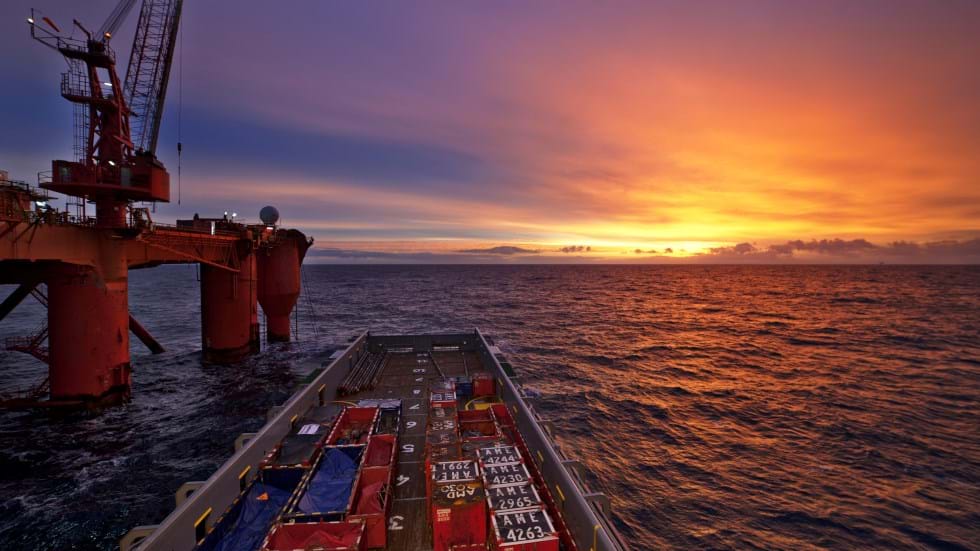
NORTH SEA oil and gas major Adura has said its plans to produce gas at the controversial Jackdaw field are “fully in line” with measures to achieve net zero.
In its latest regulatory filing, Adura reiterated its belief that combustion of hydrocarbons produced at Jackdaw will not have a significant impact on global efforts to reduce greenhouse gas emissions.
The filing came in response to a request from the Offshore Petroleum Regulator for Environment and Decommissioning (OPRED) to address 20 individual concerns regarding its previous environmental statement. However, questions remain over the expected emissions intensity of gas production at Jackdaw.
In its initial assessment submitted in 2022, Shell – the original developer before Shell and Equinor merged their UK offshore assets to form Adura – said that Jackdaw would reduce the overall emissions intensity of the Shearwater platform to which the field will be tied back. Shell estimated the emissions intensity of Shearwater operations, including Jackdaw production, would be 31 kgCO2e/boe, greater than the 2024 average across the UK Continental Shelf (UKCS) of 25 kgCO2e/boe.
OPRED asked Adura to confirm whether it expected Shearwater’s emissions intensity to still exceed the average UKCS figure. In response, Adura said it expects Shearwater's emissions intensity to be "comparatively lower...than basin benchmarks" and that the 2022 estimate was “conservative”, but did not provide a figure for the field’s entire expected 11-year lifetime. Instead, Adura included estimated intensities for the first six years of operation, averaging 16.6 kgCO2e/boe. However, emissions intensity is likely to increase as the field declines, so this figure could be significantly lower than the actual intensity over the field’s full lifetime.
Adura was approached for comment.
Global significance
Along with Adura’s much larger Rosebank development west of Shetland, Jackdaw has been subject to fierce scrutiny after a court ruled last year that prior approval of the two projects was not lawful without consideration of the end-use emissions of their hydrocarbon products. Adura has maintained it does not plan to delay either project, final approval of which will each be subject to separate decisions from the UK energy secretary. In an interview with BBC News on the day of its latest filing, Adura CEO Neil McCulloch said Jackdaw will be ready to produce gas from 1 October 2026.
Jackdaw’s total emissions, including end-use combustion, could reach 35.8m tCO2e over the field’s lifetime, which developers said were not significant on a global scale and represented under 2% of the UK carbon budget.
Unlike Rosebank, most of the hydrocarbons produced at Jackdaw are likely to be consumed in the UK. McCulloch said the project will be “hyper critical” to UK energy supply, and Adura said the development “is likely to result in less emissions than the do-nothing case of importing LNG”. Greenpeace UK’s chief scientist Doug Parr said approval of Jackdaw would be “reckless and indefensible”, while Uplift executive director Tessa Khan said “it would be a huge betrayal of the British public for the UK government to approve new oil and gas fields”.
‘Workforce for the future’
Adura also confirmed in its latest submission that on top of the 273 existing jobs on the Shearwater platform that will be safeguarded throughout Jackdaw production, the project will create 27 new jobs.
The Unite trade union supports Jackdaw and Rosebank approval, and Shell previously said that Jackdaw “can provide a platform for upskilling and reskilling the workforce for the future”. However, Adura did not provide any details when OPRED asked for information on specific provisions to train and upskill workers on Jackdaw and in the transition to green technologies in the North Sea.
Recent Editions
Catch up on the latest news, views and jobs from The Chemical Engineer. Below are the four latest issues. View a wider selection of the archive from within the Magazine section of this site.