Ithaca Energy submits plans for two new North Sea wells
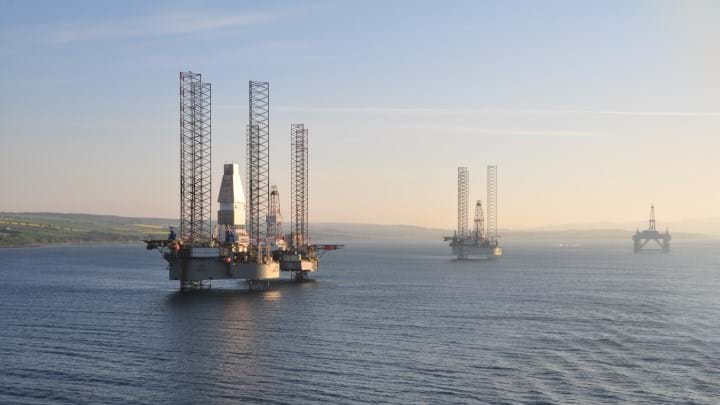
SCOTLAND-BASED oil and gas company Ithaca Energy has submitted proposals for two new production wells in a recently discovered oil field in the North Sea.
In a project summary and environmental statement submitted to the UK Offshore Petroleum Regulator for Environment and Decommissioning (OPRED) last month, Ithaca confirmed plans for two new manifolded production wells in the Fotla field, which it discovered in 2021. The company also plans to install a 14.4 km pipeline to transport oil from Fotla to be processed at Harbour Energy’s Britannia platform. The Fotla field, which is not currently producing, lies 176 km east of Peterhead, Scotland, and is expected to produce oil and gas for around 15 years.
Ithaca plans to complete drilling in the first half of 2027 with oil production expected by the end of the year. Peak production is forecast at around 10,000 bbl/d of oil in 2028 and 8,300 boe/d of gas in 2029. Almost all oil produced at Fotla will be exported for refining overseas, while gas will be fed into the UK national transmission network.
The Fotla wells will be drilled horizontally using designs proven at other wells in the region, although specifications have not yet been finalised. The oil-bearing reservoir is just 12.2 m thick, with Ithaca saying it is critical the final wellbore is drilled “completely horizontal at the correct depth”.
The Fotla proposals are the first to be submitted to regulators since the government confirmed a ban on new explorative drilling in the North Sea, while permitting some new production, in last November’s budget. Ithaca’s activities fall under a licence awarded in 2018, which the government has said will not be affected by the new policy.
Ithaca’s plans are open to public consultation until 1 February after which they will be subject to approval by the energy secretary.
Emissions and produced water
Total emissions from Fotla oil and gas production, including downstream, could reach up to 13.9m tCO2e, according to Ithaca’s estimates. Almost all these emissions would come from end-use combustion. This compares with an estimated 250m tCO2e from Equinor’s Rosebank project and 23m tCO2e from Shell’s Jackdaw development.
Ithaca said the emissions were “most likely to be in line with a climate pathway that limits warming to 2oC by 2100 but exceeds 1.5oC”, adding that the overall climate impact was “not significant”.
Another environmental concern for Ithaca is that they expect to discharge up to 1,589 m3/d of wastewater from Fotla – more than a third of the volume currently at the Britannia platform. The volume of produced water is expected to remain relatively constant over the field’s lifetime, even as oil and gas production declines.
To mitigate impacts, Ithaca plans to restart a previously mothballed separator to reduce oil-in-water concentrations and use a less harmful corrosion inhibitor within the pipeline.
David Santillo, a marine biologist at the University of Exeter working with the Greenpeace Research Laboratories, said produced water discharges are an increasing concern as North Sea fields mature. He noted that the UK released more dispersed oil via produced water than any other East Atlantic country in 2023.
Santillo told TCE: “The discharges also carry heavy metals and added process chemicals and in calm weather create a surface slick that can extend for many miles.
“The produced water discharges from Ithaca’s proposed development would amount to over an additional thousand litres of this waste stream entering the sea every minute over much of the lifetime of the field.”
Ithaca’s environmental statement said “minor local impacts are forecasted in the local vicinity of the discharge point but overall no significant effects are expected”.
Recent Editions
Catch up on the latest news, views and jobs from The Chemical Engineer. Below are the four latest issues. View a wider selection of the archive from within the Magazine section of this site.