Viewpoint: The Green Hydrogen Reset
A wave of cancelled projects is forcing a rethink of hydrogen’s role in the energy transition – from universal fuel to niche industrial feedstock, writes Tom Baxter
A FEW years ago, hydrogen was heralded as the silver bullet for net zero – a clean, flexible fuel that could power homes, vehicles and industry alike. Governments poured billions into pilot projects and energy majors raced to announce electrolyser capacity across Europe, Australia and the US.
Now, the tide has turned. A string of flagship green hydrogen projects have been cancelled, postponed or scaled back as costs soar and demand falters. bp’s HyGreen Teesside, Air Products’ Immingham plant and Statkraft’s European hydrogen programme were among those shelved in 2024–25. The economics simply don’t add up.

From hype to hard reality
Green hydrogen remains a costly commodity, limiting its use for heat and power. As the commercial realities of production have become clearer, its application range has narrowed significantly. The vision of hydrogen as a universal replacement for fossil fuels has shifted toward a more strategic role. Today, energy commentators propose green hydrogen primarily for:
- industrial processes such as steelmaking, ammonia synthesis and refining
- transportation, particularly heavy goods vehicles (HGVs), aviation and shipping
- grid balancing and seasonal energy storage
The UK’s Climate Change Committee reached a similar conclusion in its Seventh Carbon Budget, finding no role for hydrogen in heating buildings and only a niche role in surface transport.¹
Why projects are stalling
To be commercially viable, green hydrogen must be produced at a competitive cost. Figure 1 shows a typical percentage breakdown of levelised cost of hydrogen (LCOH) for a green electrolyser. It is evident that the LCOH is dominated by electricity, with the stack and balance of plant (BoP) contributing similar proportions of CAPEX. To assess commercial viability, I modelled a 100 MW green hydrogen plant using industry-standard assumptions:
- Electrolyser efficiency: 75%
- Electrolyser CAPEX: £1,000/kW
- OPEX: 5% CAPEX
- Electricity: £60/MWh
- Utilisation: 20% (based upon use of curtailed renewables)
- Discount factor: 8%
- Plant life: 20 years
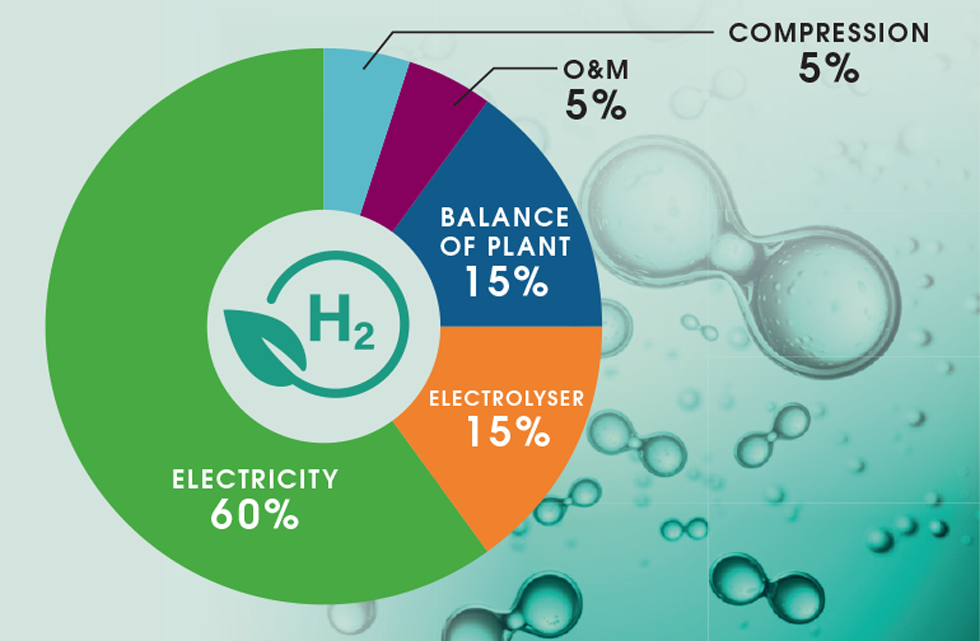
The result was an LCOH of £6.3/kg, or around 19 pence per kWh – three to four times the cost of natural gas. Sensitivity analysis (Figure 2) shows that utilisation rate has the greatest impact on reducing LCOH, followed by electricity price.
Some argue that policy uncertainty is as significant as economics in holding back adoption. Based on available data, I believe the underlying economics remain the dominant barrier.

How PEM electrolysis works
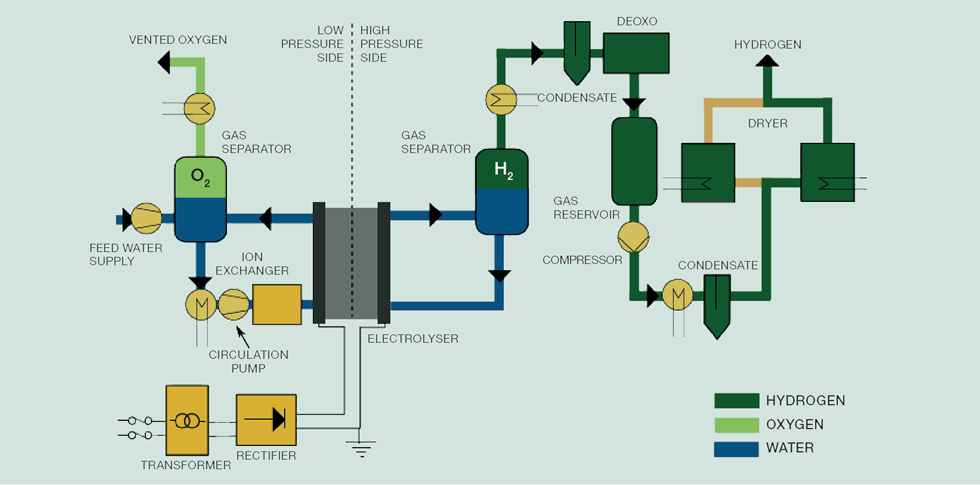
Proton Exchange Membrane (PEM) electrolysis is widely proposed for green hydrogen production because it can handle fluctuating renewable electricity. The PEM comprises:
- Catalyst anode (typically iridium oxide or ruthenium oxide) for oxygen evolution
- Membrane (often Nafion) allows only H+ ions to pass while blocking gases and electrons
- Catalyst cathode (usually platinum) where hydrogen forms as protons combine with electrons from the external circuit
Porous titanium (anode) and carbon-based substrates (cathode) provide mechanical support, electron conduction and pathways for gas and water transport, while bipolar plates (titanium or coated stainless steel) distribute reactants, collect current and manage thermal loads. Nominal operating voltage exceeds 1.23 V (the thermodynamic water-splitting threshold).

Balance of Plant (BOP)
The BoP is a critical part of a PEM electrolyser system. The PEM stack itself is only ~40–50% of system CAPEX.
- The BoP comprises:
- Water deionisation and circulation
- Deaeration (gas handling and separation)
- Power electronics
- Hydrogen compression and dehydration
- Thermal management – cooling circuit
- Control and safety systems
Typical operating parameters:
- Temperature: 50–80°C (limited by membrane stability)
- Pressure: up to 30–60 bar differential without external compression
- Current density: typically 1–2 A/cm²
- Voltage range: 1.8–2.2 V per cell under load
- Efficiency (LHV basis): 65–75% at system level
- Hydrogen purity: ≥99.999%
- Stack lifetime: 40,000–60,000 hours
Research and development
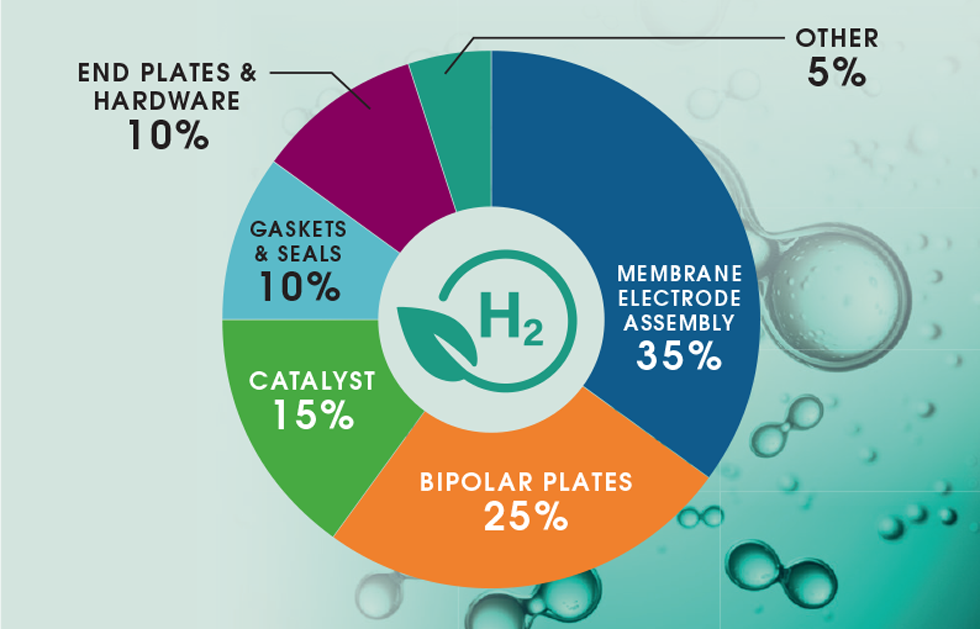
Figure 5 shows the cost breakdown of a typical electrolyser stack.
While PEM’s flexibility suits renewables, the precious-metal catalysts and BoP costs keep prices high. Catalyst materials account for around 15% of stack cost, and with the stack only ~15% of total system cost, reductions here will barely shift overall economics. Integrating waste heat from electrolysers may offer modest efficiency gains.
Why hydrogen won’t follow the wind and solar cost curve
Many advocates suggest that green hydrogen will follow the same cost trajectory as wind and solar under Wright’s Law, where costs fall with cumulative production. The comparison is flawed.
Solar and wind harvest free energy; green hydrogen converts it. The bulk of the LCOH is the purchase of electricity. Future electricity costs may fall but not to the extent that it will mean that green hydrogen will follow the solar and wind cost trajectory. Also, the BoP is made up from a well-established supply chain of mechanical and electrical equipment. Costs here will not follow Wright’s Law.
While there will be reductions in electrolyser cost and improved electrolyser efficiency, the electrolyser is only approximately 20% of the LCOH. Hence, improvements here will not have a significant impact on LCOH.
Where hydrogen still makes sense
Green hydrogen is an expensive chemical and will remain so compared to other fuels. Its use will mainly be limited to sectors where there are no other alternatives.
According to the Hydrogen Council’s Global Hydrogen Compass 2025,2 most investment advancing to final decision targets sectors that require hydrogen’s molecular rather than combustive properties – steelmaking, ammonia, refining and chemicals. Figure 6 is extracted from the report.
Heat and power remain marginal use cases. Green hydrogen is, and will remain, a specialist chemical feedstock rather than a broad energy carrier.

The outlook
The barriers to green hydrogen uptake are structural: energy inefficiency, infrastructure demands, limited scalability and weak market signals. Commercial viability and offtakers are, of course, linked. If hydrogen was commercially attractive there would be many more customers.
Hydrogen has a role to play in decarbonising sectors where direct electrification is impractical – such as steelmaking, shipping and aviation. It may also have a role for long-term energy storage.
However, its cost trajectory will not mirror that of wind and solar. While innovation and policy can reduce costs over time, green hydrogen will remain an expensive energy option.
Future progress will depend less on hype and more on targeted integration, policy certainty and industrial partnerships that make commercial sense.
References
1. https://www.theccc.org.uk/publication/the-seventh-carbon-budget/
2. Global Hydrogen Compass 2025: bit.ly/hydrogen-compass-2025
Recent Editions
Catch up on the latest news, views and jobs from The Chemical Engineer. Below are the four latest issues. View a wider selection of the archive from within the Magazine section of this site.