The Medium that Made the Modern World: Part 1: Read All About It
In the first of a four-part series, Martin Pitt examines how paper’s journey from ancient China to Europe reshaped news, literacy and society
LIGHTWEIGHT and convenient, durable yet disposable, paper has carried human progress for more than five centuries. Global production exceeds 400m t a year, placing it alongside plastics among the world’s most widely used materials, though far behind cement and steel.
The inventors
Credit is often given to German inventor Johannes Gutenberg (c.1400–1468) for developing movable metal type printing around 1450 but far less attention is paid to the Chinese inventor Cai Lun (c.55–121), who is credited with developing paper as a mass-produced material around 105. From the invention of the soft brush in 250 BCE, Chinese calligraphy had generally been done on cloth. Cai Lun took the basic material of cloth (cellulose) and made it into a superior and cheaper material at scale. This eventually enabled a massive civil service to run the expanding Chinese empire and promoted worldwide literacy. Mass printing of text (from carved blocks) on paper dates from 767–770 during which one million copies of a prayer by the Japanese Empress Koken (718–770) were produced.
Gutenberg also printed 35 bibles on vellum for wealthy clients but these would not have changed the world. Paper along with the new technology led to 500,000 books from 1,000 printing presses across Europe in the next 50 years, far beyond religious texts.
For Chinese mass production, waste cloth was a valuable addition to improve the quality of the best plant paper
Making paper

The Egyptians and Romans used papyrus – slit, layered, pressed, and sun-dried reed stalks – but it was less durable outside dry climates, so animal skins dominated in Europe.

Cai Lun’s paper, by contrast, was chemical engineering: fibrous plants such as hemp were boiled with alkali (lime or ashes) which hydrolysed hemicellulose and pectin (the glues which hold cellulose fibres together) and beaten by hand to make the cellulose fibres separate. They were washed and made into a pulp with water, which was allowed to dry out on bamboo screens. The exact ratio of water to fibre was important. If correctly judged, then the fibres not only locked together physically but also formed hydrogen bonds between each other. The addition of starch or gelatin added strength while giving a better finish for painting or writing.

Cloth is, of course, plant fibres (or animal fibres such as wool or silk) which have already been separated and cleaned. Some paper had been made from leftover fragments of cloth for at least two centuries before Cai Lun but on a very small artisan scale. He experimented with mixtures of plant and cloth fibres for different purposes, particularly hemp (used for ordinary clothing and rope) ramie (more lustrous, less durable, used for middle class clothing) and silk (only for the richest).

He also used the inner bark of mulberry trees (grown to feed silk moth caterpillars) to give the finest paper. The Chinese later used rattan, overharvested it and switched to bamboo, a fast-growing and tolerant crop which is finding increased use for paper today.

For Chinese mass production, waste cloth was a valuable addition to improve the quality of the best plant paper. A thousand years later, Europeans used cloth because of the developed textile industry. Gutenberg used linen and cotton paper. For writing and printing today the pulp is often bleached and white substances (clay or TiO2) added to give a smoother lighter surface.
How paper changed societies
Even without printing, paper and the written language were the communication media by which the vast Chinese empire was held together. Because the symbols mainly represented ideas rather than sounds, they could be understood by people who had quite different spoken languages. The difficulty of learning the many symbols discouraged all but the most intellectual and made them very wealthy civil servants, with opportunities for bribes. Famines or bumper crops, floods or insurrections could all be reported to central government so that relief, taxes or military action could be applied accordingly. At the same time, art and literature became portable.
Gradually Cai’s process spread. It was introduced to Korea in about 500, spreading from there to Japan a little over a hundred years later. It came to the Islamic world in about 750 (by the capture of Chinese papermakers), which revolutionised scholarship. Classical Latin and Greek texts were copied before they fell apart, translated into Arabic and copied again, and the research of early Islamic scientists were copied and sent to others. This had such a huge effect that it was the beginning of what was called the Islamic Golden Age where knowledge both grew and spread prodigiously. Many western mathematicians and scientists learned to read Arabic to profit from this treasure trove. Muslims also introduced foot-operated lever hammers, improving production.
The first European paper mill was established in Spain in 1056 under Islamic rule. Italy was the next to adopt the technology in 1256. By the next century it had spread to Germany and France. Water power was used for mechanical pounding. Gutenberg, and later William Caxton (1422–1491), who brought printing to England in 1476, capitalised on the new medium. Caxton used imported paper but John Tate (1448–1508) converted his watermill to make paper in Dartford, Kent from 1494. He introduced a watermark, for paper supplied to King Henry VII.
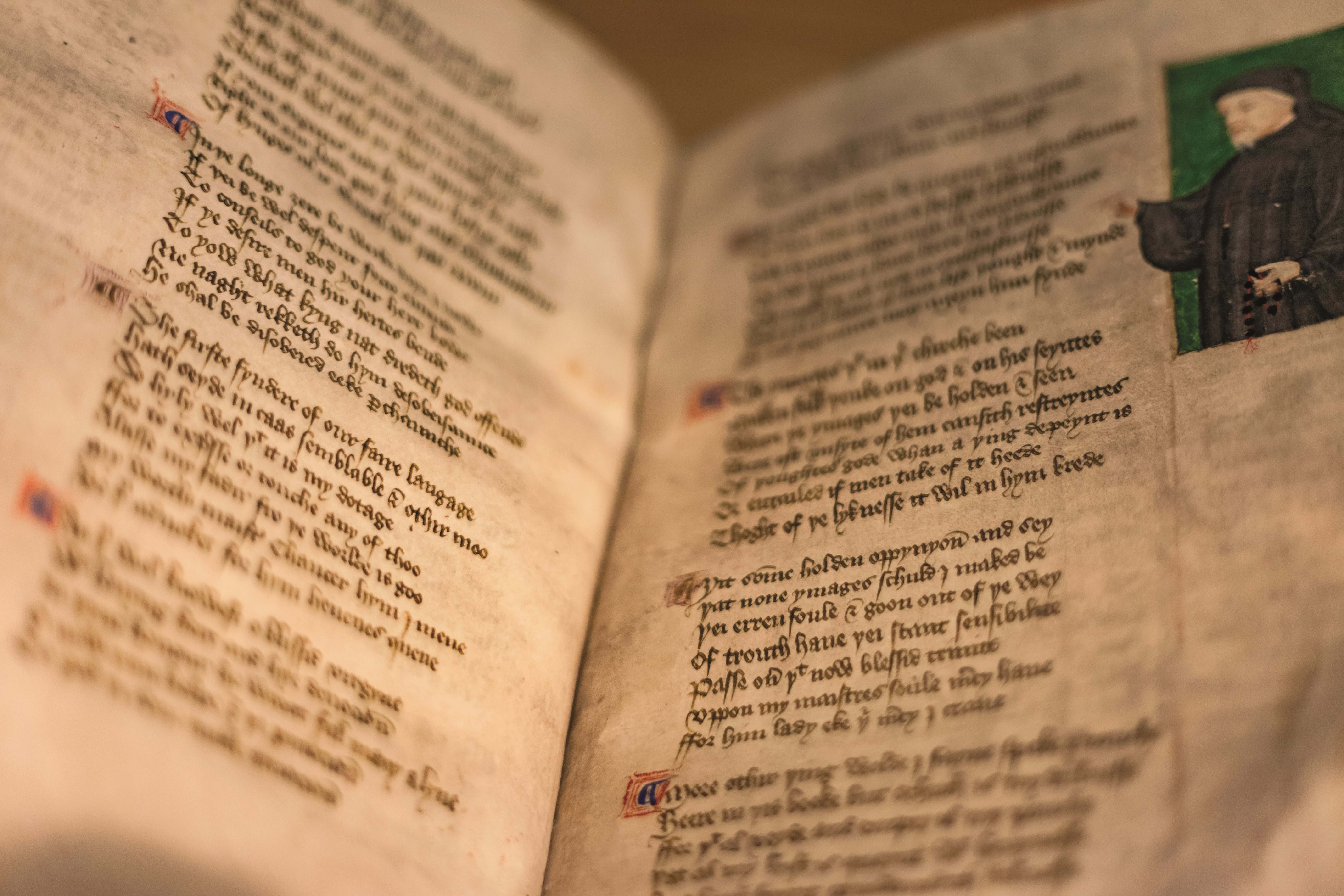
Caxton’s first publication in England was not a bible or religious text, but Chaucer’s The Canterbury Tales, a rather bawdy collection, in English rather than Latin, including the first known fart joke. He also printed adventures and romances such as the story of King Arthur and the Knights of the Round Table. He printed pamphlets for people wanting to promote some product or service for sale or political, religious or personal views, which sometimes evolved into semi-regular publications of opinions or news. Printed posters first began to appear on walls in Italy and France to advertise events and make proclamations. Later they featured not just text, but woodcut illustrations.
With greater interest as well as availability, literacy grew. In the 1600s the first newsheets began to appear. On 12 March 1702 the first daily newspaper was published, The Daily Courant, a single page with advertisements on the reverse.
19th Century Revolutions

Three 19th century technical inventions revolutionised the use of paper and enabled the newspaper to become the dominant form of printed word.
The first was the continuous production of paper in a strip, patented in France in 1799 by French engineer Louis Nicolas Robert (1761–1821) using a continuous roll of mesh to pick up pulp from a tank. The after-effects of the French revolution meant Robert’s idea was only developed to full-scale industry in England by Bryan Donkin (1768–1865), described as “the most advanced mechanical engineer of the time”.1 It was patented in 1806 by its financial backers, stationers Henry (1766–1864) and Sealy (1773–1847) Fourdrinier, after whom the machine is now known.
The second was faster printing. From Gutenberg onwards, printing presses had been manually operated. It was only on 29 November 1814 that the London Times was produced on the first steam-powered printing press, by German inventor Fredrik Gottlieb Koenig (1774–1833). This could process over 1,000 sheets per hour by rolling paper on a cylinder over a bed of type. This revolutionised the industry and vastly increased the demand for paper. In 1865, American inventor William Bullock (1813–1867) produced the first rotary “web” press fed by a continuous roll of paper printing double-sided at 8,000 sheets per hour. Tragically, he died two

years later from complications after an accident while adjusting one of his new presses.
The third and even greater revolution was the introduction of wood as a fibre. For 2,000 years, paper was made mainly from non-woody plants. Wood (except for living bark) is difficult to crush due to its lignin content, a chemically resistant aromatic co-polymer similar to phenol-formaldehyde resin. A number of people were involved in the invention of much stronger mechanical and chemical processes to produce wood pulp fit for paper.
In 1710, French entomologist René Antoine Ferchault de Réaumur (1683–1757) observed wasps making nests by scraping wood fibres free with their little mandibles and glueing them together with saliva. He suggested that paper could be made from wood but failed to carry out experiments.
Two people who did but failed to get support were Canadian lumber worker Charles Fenerty (1821–1892) and German machinist Friedrich Gottlob Keller (1816–1895) working at the same time around 1840. Both imitated wasps with wet mechanical grinders to separate the fibres but could not get the finance. Keller patented it but had to sell the patent, so others profited with the first dedicated machines from 1848. The pure paper was inferior but mixing it with rag pulp gave an acceptable product. Further developments (including pressure steaming, bleaching and improved printing ink) gave a cheap mass product, ideal for the one-day life of a newspaper. Papermaker’s alum (aluminium sulfate) had been introduced earlier in the century, which helped cellulose fibres to bond together, improved ink
René Antoine Ferchault de Réaumur suggested that paper could be made from wood but failed to carry out experiments
absorption, inhibited mould and helped clay to function better as a bonding, opaquing and smoothing agent. It is a weak acid and unfortunately contributes to yellowing and deterioration of paper in the long term, so “acid-free” papers are now used for more valuable publications. Today mechanical methods account for about 10% of new pulp production.
Chemical separation of fibres proved a major advance, since much stronger chemicals than Cai Lun had were now available. Sodium hydroxide (which hydrolyses hemicellulose and lignin) was first used to make paper from wood in 1851 by British inventors Hugh Burgess (1825–1882) and Charles Watt (1802–1875). Wood chips were boiled at high temperature and pressure. Due to lack of interest in Britain, they moved to the US. The process is still used for hardwoods and some specialist areas.
In 1867, US chemist and inventor Benjamin Tilghman (1821–1901) patented a process for removing lignin from wood using an acid sulfite solution under pressure (120–160°C), converting it into soluble lignosulfonates. He failed to develop it to a commercial process, which was achieved in 1880 in England by Swedish

chemist Carl D Ekman (1845–1904) and English chemist George Fry (1845–1934). Hemicellulose is also hydrolysed. The cellulose fibres are washed free of what is called brown liquor, which can have chemicals extracted or can be evaporated and burned for energy recovery. It amounts to 5–10% of paper production today.
An improved sodium hydroxide method was the kraft process invented by German chemist Carl Dahl (1845-?) in 1879, which uses alkaline sulfide to convert lignin to soluble compounds which are washed off the fibres. It is called kraft from the German for strength, since it gives a stronger paper than the sulfite process. It also does not require acid-resistant vessels, just steel, so became the dominant method. It works best with softwoods and pine was soon identified as an easy tree to grow, harvest and use, with side products such as turpentine distilled off in the high temperature process. It now provides about 80% of paper pulp.
An important development was the recovery boiler, invented by paper mill engineer George H Tomlinson in Cornwall, Ontario in 1929. It is a fascinating and ingenious integrated process with
Today, the paper industry uses about 14% of wood consumed each year
huge environmental and cost savings. The lignin compounds are acid precipitated with CO2, filtered and used as fuel and the char is used to reduce Na2SO4 back to Na2S for reuse. Some Na2SO4 is added to make up for losses. All kraft paper mills use it today. However, work is being done to recover lignin for a variety of uses instead of burning it.
Today the paper industry uses about 14% of wood consumed each year. In a sustainable forest it takes 25 years for a tree to mature and it must be replaced. Bamboo, which can be harvested every four years and regenerates from the same roots, is increasingly being used.
Newspaper development
In 1800, Britain used 10,000 t of paper. By 1900 this had grown to 250,000 t and newspapers had become accessible to everyone; cheap enough to discard after a single reading, published daily (sometimes with several editions) and providing quick cashflow and many jobs. As well as news, it included paid advertisements (often the main part), comments, opinions and letters on matters large and small, with particular attention to sports and items of interest to women, from cheap recipes to the latest fashion.
In 1841, the satirical magazine Punch began featuring cartoons mocking politicians and others. In 1842, The Illustrated London News was the first weekly illustrated periodical with engravings of notable events and people (actresses and royalty in particular) priced at sixpence. Rival publications soon appeared, often featuring imagined scenes of grisly murders, tragedies and salacious gossip. Publications appealing to different audiences developed for men, women, boys and girls across working- and middle-class readerships. Penny dreadfuls were weekly illustrated serials telling exciting stories, later with coloured covers and partially coloured interiors. Supposedly for working class men, they were read surreptitiously by women, servants and those of the middle class who pretended to scorn them.
Meanwhile the limited life of newspapers made them into a new resource for lighting coal fires, protecting surfaces during messy tasks, cleaning windows, insulating hot or cold food and, of course, torn up for toilet paper (manufactured toilet paper will be dealt with in a later article).
In the UK in 1990 some 2.5m t of paper was used for newspapers alone. Printed newspapers declined sharply from 2000, with increased online material, but overall paper consumption remains at 12.5m t a year
Martin Pitt CEng FIChemE is a regular contributor. Read other articles in his history series: https://www.thechemicalengineer.com/tags/chemicalengineering-history
REF
1. Early Engineering Reminiscences (1815-1840) of George Escol Sellers, edited by Eugene S. Ferguson, Smithsonian Institution, Washington DC, 1965
Recent Editions
Catch up on the latest news, views and jobs from The Chemical Engineer. Below are the four latest issues. View a wider selection of the archive from within the Magazine section of this site.