‘We can’t afford to lose the contribution of women’, says AFBE co-founder in INWED speech
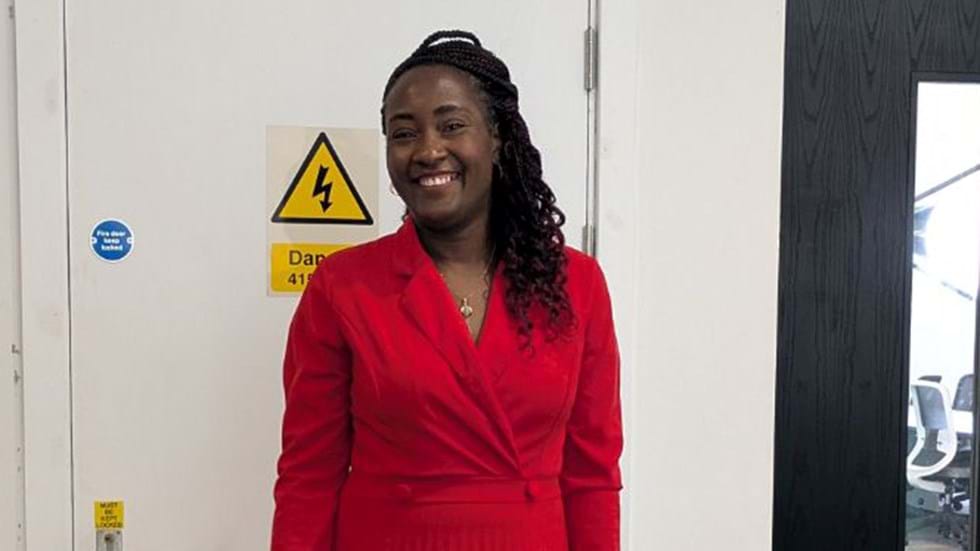
MARIAN Croak, Gladys West and Dame Stephanie Shirley “changed the world” with their inventions in internet telecommunications, GPS and software technology, according to Nike Folayan, co-founder of the Association for Black and Minority Ethnic Engineers (AFBE). “Imagine if we didn’t have them”, she challenged her audience in a speech today for the annual International Women in Engineering Day (INWED).
In her keynote speech at the University of Sheffield, centred on the official theme of “engineering intelligence”, electronics engineer Folayan recounted what she has learned from the challenges she has overcome throughout her career - and how women can be retained long-term in engineering professions.
While the number of engineering and technology occupations held by women remains less than 20%, Folayan said the main challenge is no longer “getting women into engineering”, but rather retaining them. According to the Engineering Council, the average age of women leaving engineering and technology professions in 2023 was just 43, compared with 60 for men. The world cannot “afford to lose women’s contributions” to engineering, Folayan said.
Folayan first experienced gender discrimination at work early in her career during a project for Crossrail, the major programme that delivered a new railway line across central London. Early in the project, a manager, “who I call ‘demon’ from time to time, said: ‘you are the girl in the group. You can do the admin bits’”. Folayan recalled that she felt obliged to keep quiet. “I wasn’t going to report or complain…I was just happy to be on the project”. Later, she met a former Crossrail colleague who told her he didn’t know she was an engineer. The experience taught her “how easy it is to overlook talent”.
Entering the workplace straight after university in 2007 was a shock for Folayan. “I really thought I would walk into an office space and I would be perfect…I am a very social person, I am not an introvert”. However, after several occasions in her career in which she believes she was excluded “solely based on my gender and my ethnicity”, “I got to a point where I thought: ‘what is the point?’” She became known as “the mumbler” because she “couldn’t even get [her] words out properly”.
“This is why so many women join the profession with so much enthusiasm”, only to withdraw in middle-age.
‘Different perspectives’
Throughout her speech, Folayan argued that inclusion is vital for innovation. “Over time, I have come to realise that innovation is not only about technology. It is about understanding people, sometimes, more so than the technology itself”, she said. “If we really want to innovate, we want the best team”.
“Innovation requires different perspectives”, both socially and technologically, she stressed.
Folayan said her experience at Crossrail “taught me to be introspective”, and she encouraged female engineers to have mentors for personal and professional development as well as technical. She also advised people to try and build up their professional networks before they enter the industry.
Folayan has dedicated a significant amount of her career to advocating for better inclusion and diversity in engineering, co-founding AFBE alongside her brother and current IChemE President Ollie just under 20 years ago. She was awarded an honour of MBE in 2020 for contributions to diversity in engineering.
AFBE is hosting its own virtual INWED event on Thursday for 11-18 year-olds. The organisation will also be supporting the the Institution of Engineering and Technology's 2026 Young Woman Engineer of the Year Awards, winners of which will be announced in December at a ceremony in London.
Correction (24/06/26): The Young Woman Engineer of the Year Awards is run by the Institution of Engineering and Technology and not by AFBE as was reported in the original version of this article. AFBE is anofficial supporter of the event. (25/06/26) This article was updated to reflect that Nike Folayan was speaking at the University of Sheffield in her capacity as AFBE co-founder.
Recent Editions
Catch up on the latest news, views and jobs from The Chemical Engineer. Below are the four latest issues. View a wider selection of the archive from within the Magazine section of this site.