UK to reintroduce chief water engineer role after 20-year gap
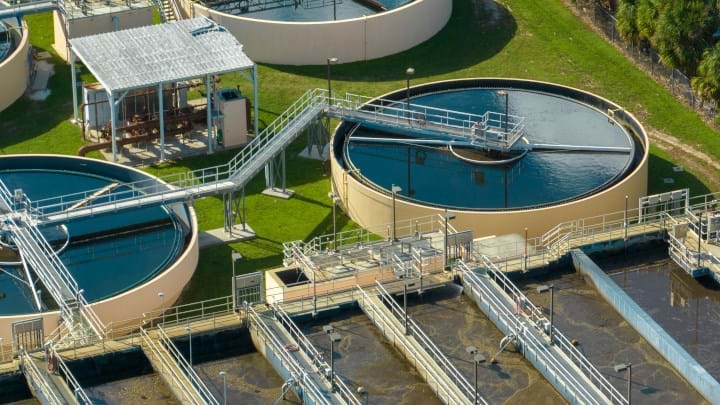
THE UK government plans to reintroduce a chief engineer at England and Wales’ water regulator as part of sweeping reforms to strengthen oversight of the privatised sector.
In her water white paper, environment secretary Emma Reynolds confirmed the government’s plans, announced last summer, to abolish existing regulators Ofwat and the Drinking Water Inspectorate (DWI) and replace them with a new, single regulator with greater powers. The new regulator will also assume water responsibilities currently held by Natural England and the Environment Agency.
The new regulator will be able to issue fines to water companies who breach quality standards – a power currently afforded to the DWI only under very specific circumstances. The new regulator will also establish supervisory teams for each water company and conduct routine “MOT” inspections of facilities to identify necessary improvements. The department for environment, food and rural affairs (Defra) could not confirm who would pay for any required improvements or whether costs will be passed on to customers.
The new chief engineer will “oversee a fundamental shift in the culture of the regulator and enable engineering-based supervision”, the white paper says. The title was abandoned by Ofwat in 2005 and replaced by roles largely held by economists and finance specialists. Ofwat had a chief economist post from 2016–2023 but no explicitly technical role has existed since 2005. Currently, just one of Ofwat’s 16 board members and non-executive directors has worked as a practicing engineer.
The new regulator will also conduct “no notice” inspections to assess security risks, emergency response capability, cybersecurity resilience and extreme weather preparedness. Defra did not confirm whether no notice inspections would take place if general poor performance was suspected.
The white paper marks the first stage of legislation and will be followed by parliamentary scrutiny and a vote. Defra will also publish a transition plan outlining implementation timelines.
Quality control
DWI chief inspector Marcus Rink welcomed the plans, saying existing regulations left him with “few options” to penalise South East Water after failures at its Pembury treatment works left 24,000 customers without supply for two weeks in December. Although the DWI can issue fines under the Security and Emergency Measures Direction, Rink said South East Water were able to bypass enforcement since they used a “very rarely used clause within the regulation” allowing them to issue a “boil water” notice instructing customers how to access safe supply.
The DWI can also criminally prosecute water companies, but these can “cause delays in compliance”, the white paper noted. Since its founding in 1990, the DWI has brought just 59 prosecutions. A case against Anglian Water in May 2025 over breaches between 2016 and 2021 resulted in a record fine of £1.4m (US$1.9m), but fines ordered in many other cases have been less than the DWI’s costs.
Rink was critical of the absence of electronic water quality monitoring at Pembury, accusing South East Water of “flying blind” to coagulation failures. The government’s new proposals include “open monitoring” plans, obliging water companies to publish near-real time data from their facilities.
South East Water has received sustained criticism over its handling of three supply outages since December, the latest caused by a power fault resulting in low supplies in storage tanks, affecting 4,500 homes in rural areas around Maidstone. The company’s conduct drew the ire of environment committee chair Alistair Carmichael who accused South East Water of attempting to “mark their own homework”, referring to a report produced by directors that contradicted Rink’s evidence.
The government banned “unfair bonuses” for bosses at underperforming water companies last year. Before the ban came into force, bonuses totalling almost £200,000 were paid to South East Water CEO David Hinton and CFO Andrew Farmer on top of combined salaries of £559,000.
Recent Editions
Catch up on the latest news, views and jobs from The Chemical Engineer. Below are the four latest issues. View a wider selection of the archive from within the Magazine section of this site.