Rosebank and Jackdaw developer told to further revise emissions estimates before approval decision
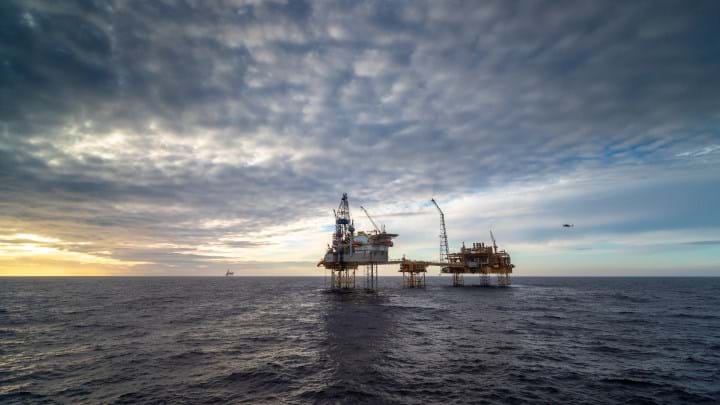
THE DEVELOPER of the Rosebank and Jackdaw oil and gas projects has been instructed to make further revisions to its environmental assessments after regulators reviewed their most recent submissions.
In letters to Adura Energy, developer of both projects, the Offshore Petroleum Regulator for Environment and Decommissioning (OPRED) said the company must address several inconsistencies before the projects can be referred to UK energy secretary Ed Miliband for a final approval decision.
Rosebank and Jackdaw were greenlit by the previous government but a court ruled in January 2025 that approval had been unlawful without consideration of the estimated emissions from combustion of extracted hydrocarbons. Last autumn, reports were submitted estimating Rosebank could generate up to 250m tCO2e over its lifetime while Jackdaw could produce around 36m tCO2e.
Previous emissions estimates for Rosebank were calculated by Equinor while Jackdaw’s were calculated by Shell. The two companies merged their North Sea and west of Shetland assets in December 2025 to form Adura.
Regulator raises concerns
OPRED identified 71 issues across the two assessments, including concerns over how the projects’ emissions were evaluated. The regulator challenged the conclusion that emissions from both projects were “not significant” at a global level, saying it was not “meaningful” to compare an individual project’s downstream emissions with total global emissions “because of the obvious difference in scale”. It has asked the developer to reassess the projects’ significance and to consider cumulative impacts, pointing out that each assessment only considered the projects individually.
The regulator also rejected Equinor’s claim that oceanic and land carbon sinks have absorbed more CO2 as atmospheric levels have increased, pointing out that research suggests the contrary.
Further issues were identified in the assumptions underpinning the assessments. These included reliance on scenarios aligned with limiting global warming to 1.5°C. The Intergovernmental Panel on Climate Change has said this is now unlikely.
Similarly, the Rosebank assessment referenced an International Energy Agency (IEA) report to support its claim that the project will help meet global oil demand, even under scenarios aligned with net zero projections. However, it did not mention that the same report also said “there is no need” for investment in new oil and gas projects.
Wider context
The latest developments follow a parliamentary vote in which the government rejected a proposal to reapprove the projects.
That same week, Greenpeace activists boarded the floating production, storage and offloading vessel Adura plans to install at the Rosebank field and spraypainted “they profit, we pay” on the side.
Meanwhile, the heads of RenewableUK and GB Energy have expressed support for continued drilling in the North Sea.
Located west of the Shetland Islands, Rosebank is thought to contain the UK’s largest recoverable oil reserves at 300m bbl, with peak production expected to hit 73,000 boe/d. Jackdaw, meanwhile, will largely produce gas condensate, most of which is expected to be used domestically.
Adura Energy has indicated that, subject to approval, both projects could begin production by early 2027.
Recent Editions
Catch up on the latest news, views and jobs from The Chemical Engineer. Below are the four latest issues. View a wider selection of the archive from within the Magazine section of this site.