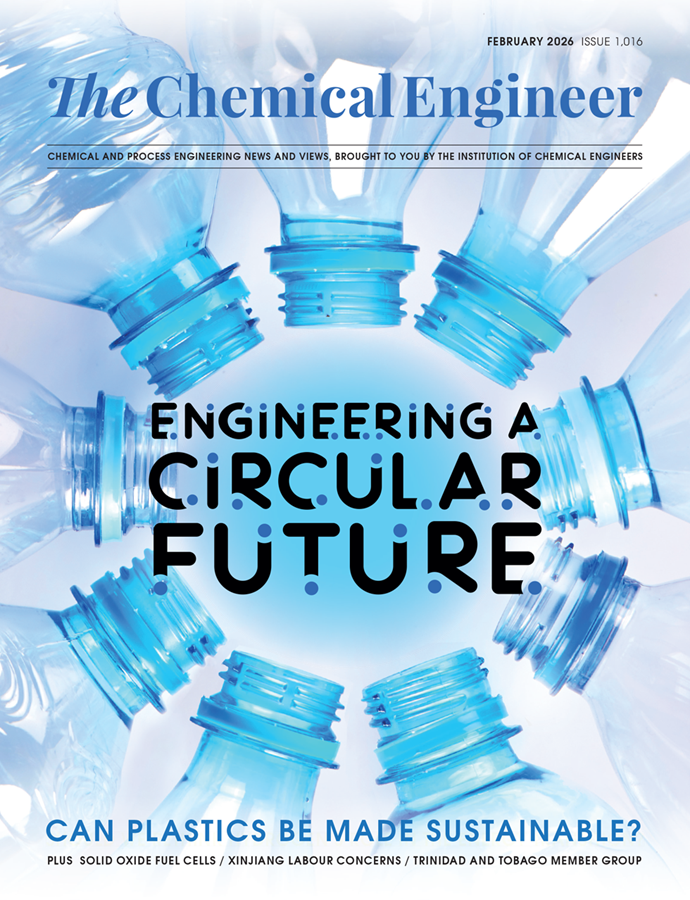
Engineering a Circular Future: Can Plastics Be Made Sustainable?
From carbon to cracking, the chemicals industry is seeking a net-zero solution to plastics. Sam Baker explores the challenges
LOVE them or hate them, plastics pose problems on a global scale. Recycling rates remain stubbornly low – typically between 5% and 17% – with the rest ending up in landfill or incinerators, driving demand for ever more energy-intensive petrochemical production. Progress often appears stalled, while international efforts to address plastic pollution repeatedly falter. The question remains: can engineering provide a way out of the plastics mess?
Reinier Grimbergen certainly thinks it can – at least in part. As CTO and co-founder of Netherlands-based Blue Circle Olefins, he believes that by 2035 the company could produce zero-carbon ethylene and propylene at the same scale as a conventional steam cracker – not by recycling end-of-life plastics, but through converting biowaste-derived methanol into olefins.
The goal, Grimbergen says, is to “defossilise the chemicals industry by bringing in circular carbon instead of fossil carbon”.
Producing olefins from methanol is not new. Commercial-scale plants have been doing it in China for more than a decade using methanol derived from coal gasification. “There is no technology innovation as such,” Grimbergen says – but he sees that as an advantage. “If we want to be serious about being net zero and circular by 2050, you need TRL [technology readiness level] 9 technologies, because you need to operate at the million-tonne scale.”
Where Blue Circle Olefins aims to differentiate itself is by linking the entire low-carbon value chain, powered entirely by renewable electricity. Electrification is more feasible for methanol-to-olefins (MTO) processes because the reaction is exothermic. Grimbergen says the process can operate at around 350°C – almost two-thirds lower than the temperatures required for a typical steam cracker.
The company expects to enter front-end engineering design within the next year. It plans to build a 200,000 t/y MTO plant in Rotterdam, producing ethylene and propylene in a 40:60 mass split from 500,000 t/y of renewable methanol, which they are aiming to be operational by 2030.

Grimbergen (pictured) is confident on feedstock availability. Global renewable methanol production, he says, could reach 55m t/y by 2030 – more than half of today’s estimated 100m t/y of grey methanol. Infrastructure, he adds, is already in place. “Every year there is 4m t of methanol already going through the harbour in Rotterdam.”
Beyond that, the ambition is to scale rapidly. A 1m t/y plant would match a typical steam cracker, Grimbergen says. “If we then add two 1m t-scale plants, then we have basically completely defossilised the entire ethylene and propylene-based chemicals industry in the Netherlands. And that is doable before 2050.” Blue Circle Olefins is already in discussions with major plastics producers – “brands that we all have in our home and have in our hands every day”.
There is, however, a catch – one largely beyond the company’s control. “Plastics are not yet recycled at the rate they should and could be,” he acknowledges. So, are they just adding to the problem by producing more olefins?
Recent Editions
Catch up on the latest news, views and jobs from The Chemical Engineer. Below are the four latest issues. View a wider selection of the archive from within the Magazine section of this site.